Where did the word “Moel” come from?

Standard

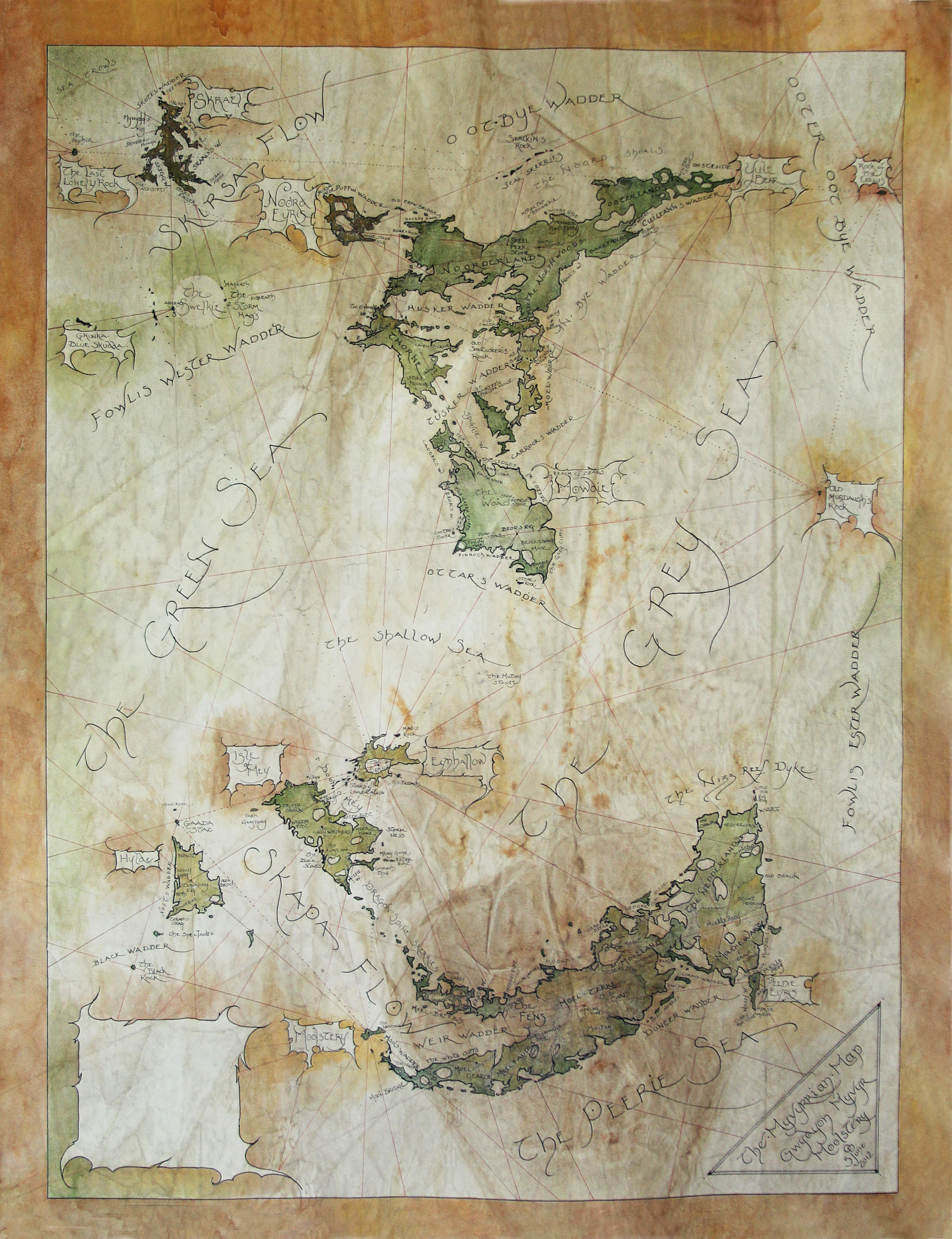
A Myvyrrian Map  5 June 2012

An early version of the Myvyrian Map

The one question that I am most often asked as a writer is: “Where did the word “moel” come from?”

It’s a fairly straightforward answer but the evolution and how the word came to define both my writing and illustrating is unchangeable.

I used to be a secretary/administrative assistant/office manager and have sharp typing skills.  I still type 110 wpm to this day.   But, sometimes my fast typing does make for mistakes.  And that’s where “moel” came from.  I was trying to type the word “mole”.  When I saw the typo I liked it so much that I kept as MY word.   And I named my studio Moel Eyris Studio (at Henwoodie).  Eyris is MY word for “Island(s)”.   Over the course of doing research in archaeology and prehistory (of Scotland) I came across another very interesting word: moudiewart — which is the archaic Scottish word for “mole”.

If you look up moudiewart in the OED you will find a fascinating array of definitions.  The most profound being: moldo warpo that translates literally as “earth thrower” (a mole).  Naturally, as a writer, I took the etymology of these words to heart and they became the core of my own mythology: THE LAY OF MOEL EYRIS: The Saga of the Bear’s Son.

I created an entire history for my word “moel”: mool, maol, moel, and so on.  I like to think that “mool” is the most archaic in the etymology of the word ‘moel’.   And, of course, I created my own definition for the word.   The most interesting definition is for the word “maol” — it means “mythographer” (not mole).

In my mythology moles and mythographers play the most important roles in the narrative.  Many geographical place names on the Myvyrian Map of Moel Eyris are derived from “moel”.

Here are some examples: Moel Terre (Mole’s Earth); Moel Weorpe (Mole’s Worth); Mowdie, Moudiewart, Moel Faulds; Moel Breeks, Mools Wadder; mool dykes; Moolstery; Cymry of Maols, and so on.  In my mythology the actual animal, a mole, is most often a “scupper” or messenger (for maols).

So, from one simple typographical error sprang an entire mythological world in which nearly all my stories and illustrations are set.

THE LAY OF MOEL EYRIS: The Saga of the Bear’s Son comprises five books:

The Secret Book of Moolstery

The Secret of the Mool Dykes

The Secret of Morag’s Too’er

The Secret of the Myvyrian Map

The Secret of the Dragon Eggs

The narrative is firmly rooted in more than thirty years’ research delving into the prehistory of Scotland, the Orkney and Shetland Islands, the Outer Hebrides, St. Kilda, and, of course, The Flannan Isles.

I wanted to create (write) my own world in which magic was real and based on fact, not wand waving fiction.   Words have power.  Throughout history this has been proven time and time again.  Just think of that old adage: The pen is mightier than the sword.   It’s very true.

THE LAY OF MOEL EYRIS (from now on referred to as LOME) tells the story (and history of a mysterious and real archipelago that is neither “here nor there”.  It is betwixt and between the two Realms of Man and Faërie.  The inhabitants of these islands are diverse and have fascinating stories of their own.   The fates are intertwined, their destiny is unstoppable.   Their beliefs are unshakeable.   

To go back a wee bit farther in my own evolution as a writer I would have to tell you that 1) I have always been an avid reader and that 2) it was when I discovered the writing of J.R.R. Tolkien that my life was changed forever.   I became obsessed with “barrows” and “barrow-wights” and when I looked these words up in the OED it became imperative that I visit England and Scotland and see these remarkable ancient structures for myself.

Note:  IF you look up the word “barrow” in the OED it will refer you to such words as “cairn,” “tumulus,” “burial mound,” etc.

My quest to explore cairns and barrows myself began in 1978 with an extended eight week expedition (sounds so much more interesting than “trip”) to Scotland.   And then onto the Orkney Islands, across the north coast of Scotland (hitchhiking and hiking) and taking the ferry from Ullapool to Stornoway in the Outer Hebrides.  

I must say that I was NOT disappointed in the sites I explored.  My imagination was set on fire and the more I saw and explored, the more I read about these ancient sites, and then began to read (and hear) the legends and superstitions associated with them, my work and writing would change forever.

If you go back and look at one of the very first picture books that I wrote and illustrated you will see how profoundly archaeology and folk beliefs influenced my writing and illustrating.  RAVENA (Holiday House, 1983) was the first children’s picture book that shed light on my fascination with cairns, standing stones, bean sidhes, bog trotters, etc.   My own mythical world of Moel Eyris began to take form.

Throughout my career as a professional writer and illustrator I have made detailed maps, architectural plans, sections, elevations (of farm buildings, cairns, Moolstery et al) and have kept thousands of pages of detailed notes on the flora and fauna of the islands, the inhabitants (how they came to be there and how their lives evolved), the history, the magic and the mystery of these islands—in short, Moel Eyris became MY world.

As this blog evolves (you notice that there is a lot of evolving in my life and work) I will share glimpses into the world of Moel Eyris and will begin to outline who is who and what is going on in their life (or death).   

As I work on the illustrations for picture books that I am obligated to finish it is very difficult to NOT think about, not write about, Moel Eyris—the Islands on the Edge.
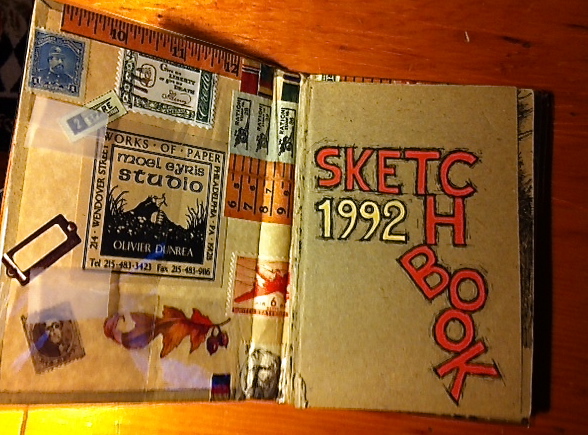
1992 Sketchbook

Standard

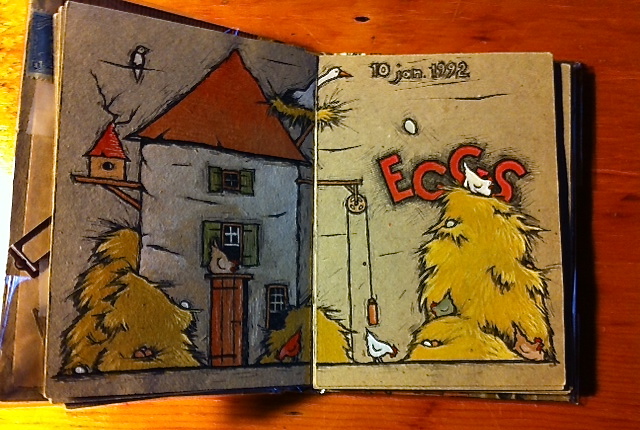
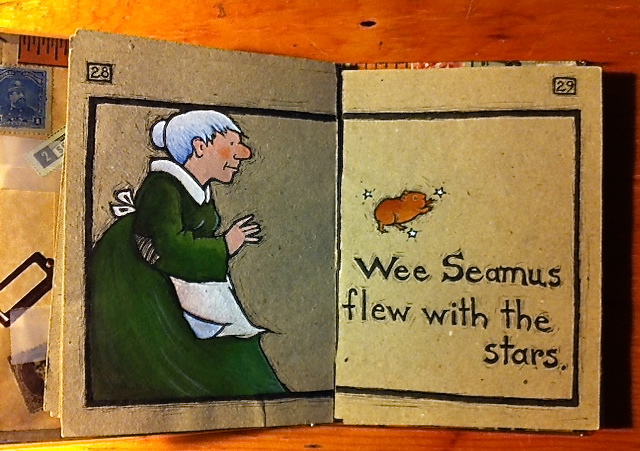
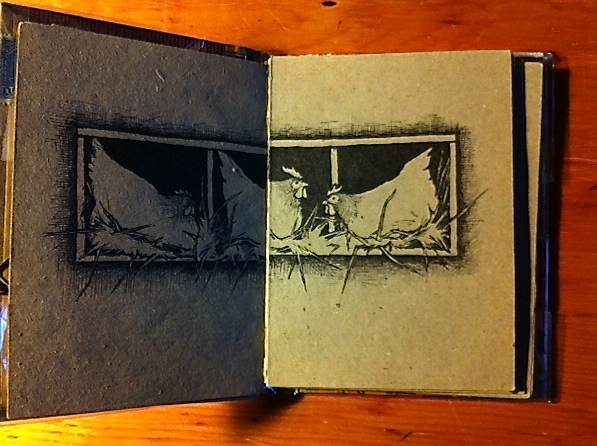
Back in 1992 I kept a sketchbook where I drew ONE picture every day.   It was an exercise to try to become a more confident drawer.  The sketchbook is 5″x7″ or 4″x6″ (I’ll have to measure it).  It’s quite small.   Many of my book ideas came out of this sketchbook and others like it.  Sometimes I added a few words to record an idea or thought that added humor or insight into the picture.

Here are some of the sketches:

SB Front Cover

SB19

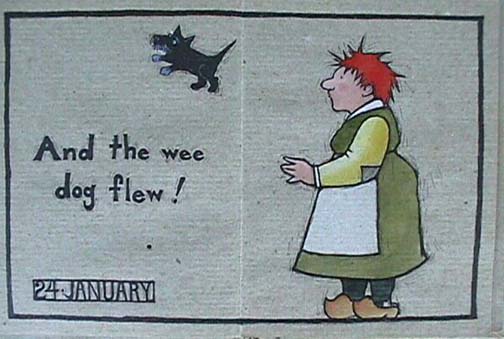
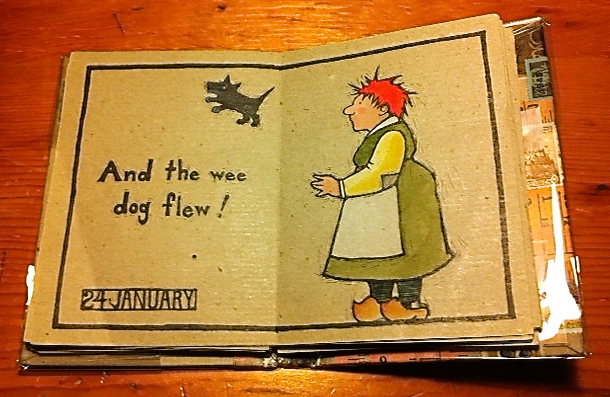
And The Wee Dog Flew

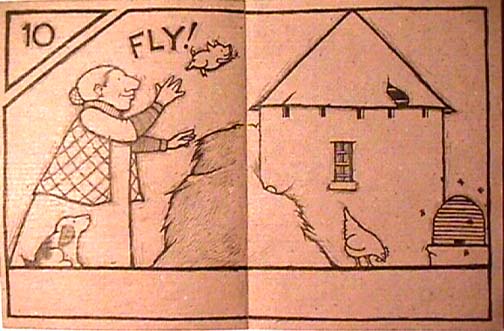
FLY!

SB3

SB6

SB9

SB20SB14

SB2

As both a writer and illustrator a book idea often starts with a sketch.  Then the words come and the two merge together to begin to tell a story.

Writing is definitely easier!

Standard

Writing is definitely easier than illustrating.  No doubt about it!   I don’t struggle with words the way I struggle with pencil and watercolour brushes.   Even after all these many years of writing and illustrating books for children I am still intimidated by a blank piece of watercolour paper and terrified of making that first fateful pencil mark.  

As I work on the finished illustrations for A BED FOR LITTLE CUB I keep telling myself two things: 1) if I make a mistake I can always start over (this never really seems to work to give me courage to plunge in and just start drawing) and 2) it’s only a 12″ x 12″ piece of paper that you have to make magic happen on!

12″ x 12″ can seem like a huge wall mural when you have to make every single stroke of the pencil or brush count.  There is no room for error.   And there’s plenty of room for mistakes.  sigh…

Another trick I keep telling myself is:  “Oh, just start drawing, have fun with it, it’s only a sketch.”   This little mind trick is what I try when I’m actually working on a finished illustration.  Sometimes it works, sometimes it doesn’t.   There’s always that wretched little creature on my shoulder, whispering in my ear, Doubt.  

I do gain comfort from one of my most favorite illustrator’s words, Margot Tomes: “Drawing isn’t at all easy or fun for me—it’s very difficult.”

MY feeling exactly!   I love to draw, but there is something very intimidating about doing a drawing, making an illustration that is going to be published for all the world to see and make note of any missteps you make.   

I have to get these seventeen illustrations finished and I feel like I’m slogging away through a tub of molasses and not making very much progress!   I know what I want to draw and I wish I could draw faster and paint faster.  But, it feels like an interminable painstaking process.  

It’s not illustrator’s block (or is it).  It’s simple avoidance.  I force myself to sit at the drawing board in the studio willing “magic” to happen and not letting myself get out of my chair until it does.  

It’s now 5:00 o’clock in the morning.  Magic was very slow in coming tonight.   I find myself mumbling to myself “After all, tomorrow’s another day.”

Work in the studio is coming along nicely!

Standard

I am excited about the work that I am accomplishing in the studio as I work on the finished layouts and finished artwork for A BED FOR LITTLE CUB!   I’m not doing any writing at the moment because I have to get 17 finished illustrations done by the end of August.  Then back to writing (and still drawing).

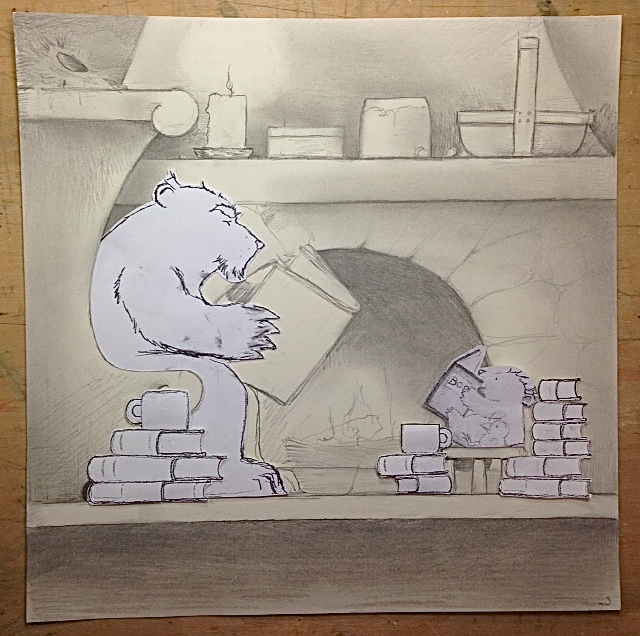
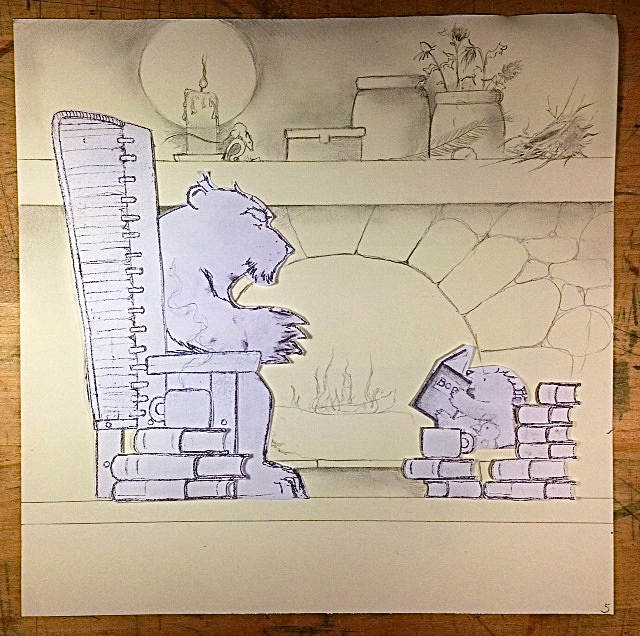
Here is the almost final revised layout for the first page of the story (page 5):Finished Page 5

I am very pleased with this sketch.  I have to decide if the second mouse should be perched on top of Old Bear’s chair or quietly sitting on the edge of the hearth behind his chair.   The duck decoys work beautifully in this picture and I’m so glad that idea came to me before I did the final drawing and painting of this illustration.

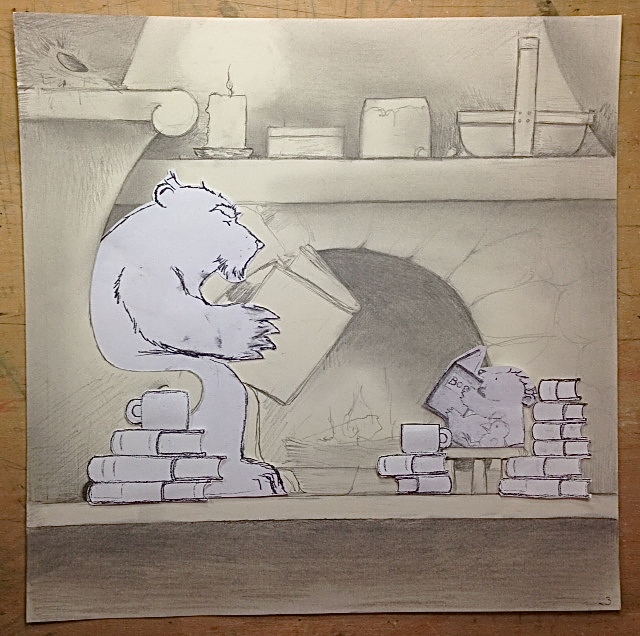
Here is the almost original layout (the stacks of books were added later):

Books

It is easy to see how the composition has greatly improved since this very early sketch/layout.

Duck decoys!

Standard

It’s a lawn mowing day here in the mountains.  The sound of lawn mowers surround Henwoodie as everyone seems to be out mowing their lawns.  I mowed ours a couple days ago.   Other than the sound of the mowers, birds are chirping and the air hangs heavy over the trees.  The sun is trying to come out, but it’s one of those uncertain end-of-summer days.

I worked in the studio until 7 am.   I am making progress with the finished illustrations for A BED FOR LITTLE CUB.   Ideas come at the oddest moments.   Around 3 am the idea came to me to put old, rustic duck decoys and carved ducks on the mantle of the fireplace in the two illustrations that feature the stone fireplace as the central background element.   The ducks will add a touch of specific quirkiness to the lives of Old Bear and Little Cub (they certainly are NOT duck hunters!).  I like the shape of the duck decoys and the earthy colours that I can show in the pictures.

I threw caution to the wind and went ahead and started painted the entire tree that shows Little Cub sleeping on a bowed lower branch.   The picture will be cropped to fit the 10″x10″ trim size of the book (and most likely reduced a bit).   This picture will be used on the half title page.  My thought is that it makes a nice lead-in to the idea that Little Cub wants his own bed to sleep in.

Here’s the painting as it is progressing:

Tree underpainting 2

This jpg shows the first layers of underpainting.  


Making Progress…

Standard

I’m slowly making progress with getting the finished layouts and illustrations done for A BED FOR LITTLE CUB.   The pressure is on to have these pictures finished by 25 August!   It’s at this stage in doing the finished art that I always wish I was somewhere else, doing something else entirely, and just not having to worry about getting the artwork finished!   You would think that the easiest thing to do would be to JUST DO IT AND GET IT DONE!   

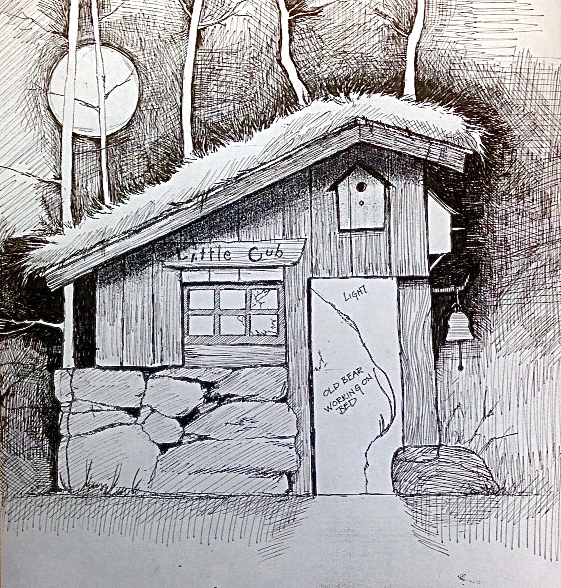
Here’s the layout I did last night.  The layouts are always rough and the “magic” happens when I transfer the layout onto the  watercolour paper and start painting.

Shed 2

After getting the “idea” down on paper in a sketch/layout I then can more easily make the decisions as to what needs to be changed, eliminated, or added.  Right now two of the background trees look like horns grown out of the roof of the work shed.  I think they’ll have to be deleted in the finished art.

And, of course, as I work on the finished pictures the text of the story often changes.   When I see that the illustrations more clearly (and usually more strongly) conveys what I’m trying to do to move the story along I see where words can be cut altogether.  In other instances, I see where I may need to add a line in order to make the shift to another scene (from indoors to outdoors, for example) more logical.   

For me the words and pictures work “hand-in-glove”.   They cannot be separated.

Tonight I’ll plunge in and will do the finished painting of this layout.  If it comes out good I’ll post a photo here.

LITTLE CUB: Creating the Artwork

Standard

If you’d like to see and hear how I go about creating the artwork for the Old Bear and Little Cub series I posted a video on youtube titled: LITTLE CUB: Creating the Artwork.  I don’t know how to embed the url here in this blog (something I’ll have to figure out).  But if you’d like to see my work method go to youtube and take a look!

A BED FOR LITTLE CUB

Standard

The current book project on the drawing board is A BED FOR LITTLE CUB.   This is the third book in the Old Bear and Little Cub series (OLD BEAR AND HIS CUB; LITTLE CUB).   The writing is finished.  Right now I’m working on the finished illustrations (17) for the book.

Here is a sneak peek at a couple layouts for the book:


New Page 5

This is the first illustration in the story.

Text:

Page 4-5            Old Bear and Little Cub sat by the fire.

Fireplace            “Time for bed, Little Cub,” said Old Bear.

The layouts are my guides to doing each finished picture in the book.  I often make changes as I work on the finished art.  Sometimes it’s a simple addition of an interesting detail.  Other times it’s taking something out that simply isn’t necessary.

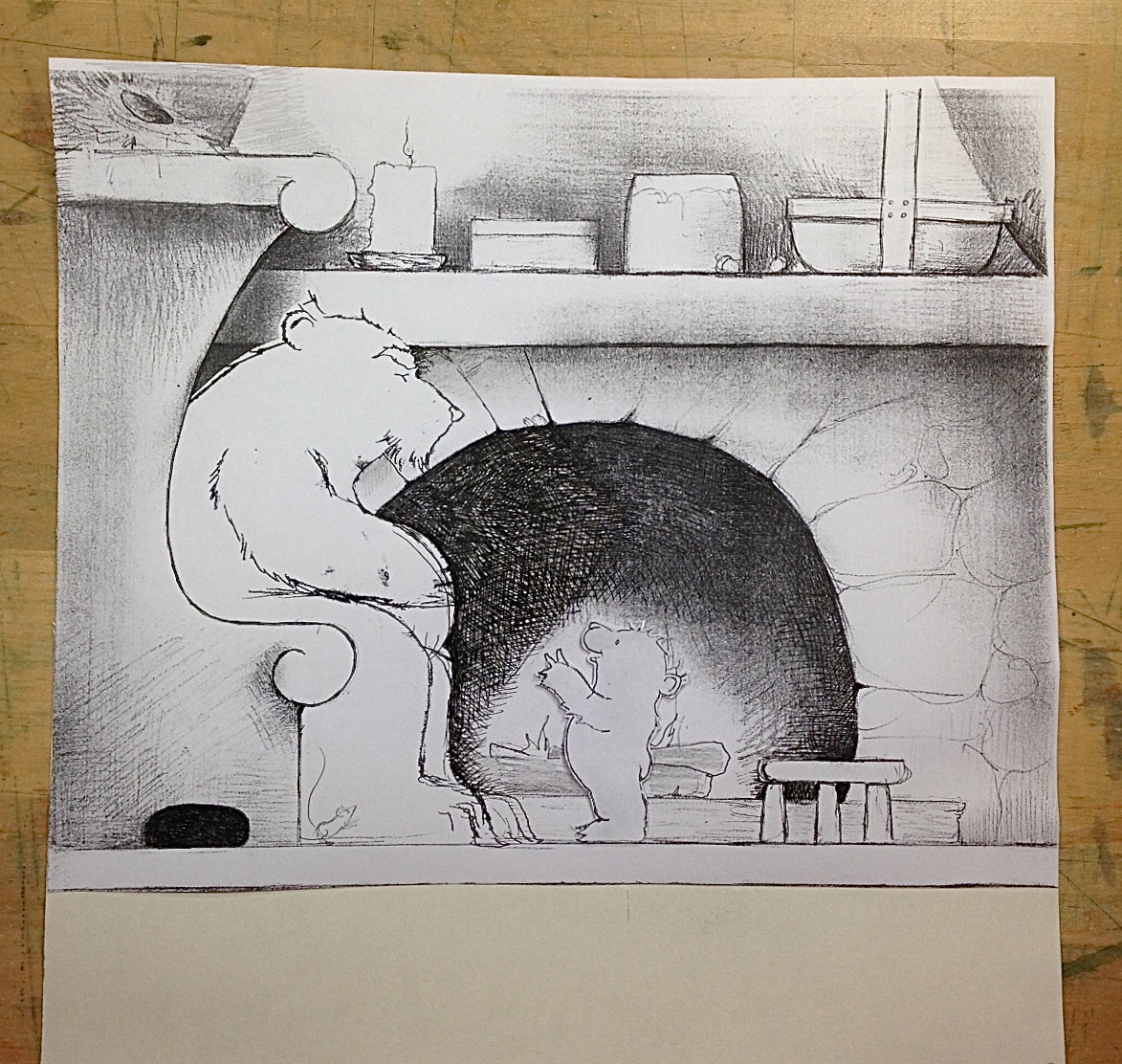
Here is the original sketch/layout for the first illustration in the story:

Books

This sketch was done quickly in order to capture the moment in the story that I wanted to illustrate.   Notice how the fireplace was simplified and the objects better arranged on the mantle. I decided to use a traditional Orkney straw-backed chair (have a miniature chair model that I had bought in 1978 during that first visit to the islands).

Page 7

This is the sketch for Page 7 in the book.  Again, this was an early sketch before I changed the fireplace, Old Bear’s chair, and added books.  All these details will be done in the finished artwork.  No need to make them here.  I know what the changes are and that’s all that matters.

Here is the text that goes with this picture:

Page 6-7            “Tell me a story, please,” said Little Cub.

Fireplace            “Just one story,” said Old Bear. “In bed.”

                           “Two stories,” said Little Cub.

                           “One story,” said Old Bear.

                           “One and one-half stories,” said Little Cub.

                           “ONE story, “ said Old Bear.

                           “Hmphf!” said Little Cub.  

For the Old Bear and Little Cub books the format is straightforward: text is always on the lefthand page and the illustration is always on the righthand page.   I have never liked it when text is superimposed into or on top of an illustration.   I like to keep the two as separate as possible.  

You will notice how in the manuscript I always note the page numbers and give a one or two word description as to what is the key element to be shown in the illustration.  It’s how I keep track of interior and exterior scenes, etc.  

As the relationship between Old Bear and Little Cub grows I wanted the pictures to show a cozy home life, security, and the caring, loving nature of Old Bear (underneath his gruff exterior).  Old Bear firmly believes in routine and structure in his life and in the life of Little Cub.

The illustrations for this book will be finished by the end of August.  The book will be published in the Fall 2015.


My Daily Routine

Standard

It’s three o’clock in the afternoon and I’m slowly waking up after a long shower and am now having my first cup of coffee.  The sun is valiantly trying to break through the clouds.   Henwoodie is quiet and waiting for me to wake up.  

I had posted that I am living the life that I always imagined I would live.  That life includes working in the studio all night (until six o’clock in the morning) and sleeping late.  I’ve never been a morning person.  I am most productive after three o’clock in the afternoon.

At the moment I’m working night and day to finish a pressing book deadline.  The writing is finished. The editing is finished.  And the layouts are done.   Being both a writer and illustrator means that I bide my time between writing and illustrating.   I should point out that writing comes much more easily to me than illustrating.   I am a writer who illustrates rather than an illustrator that writes.

For some strange reason I don’t have the fear of making mistakes with words, even when I do make mistakes.  And lots of them.   It’s facing a blank piece of paper knowing that I have to try to create magic with pencil and gouache that is terrifying.   I’m definitely the white knuckle type of illustrator.

Once an illustration is finished, then the book.   I can only see all the mistakes I made.  Small things that I should have changed, would love to change.   It mystifies my friends and family that once a book is finished I really don’t have any more interest in it.  I seldom look at the published printed book.   For me, it’s the creative problem solving process of writing, designing, and illustrating a book that fascinates me.   When I’m writing or illustrating I really do “live” the moment in time in the story.

Interestingly enough, what I do love to read and reread over and over are my research notes when I’m working on a more ambitious writing project.

In 1978 I first ventured to Scotland for eight weeks and fell in love with the landscape, the people, and the prehistoric sites.   From 1978-98 I kept going back in order to visit, think about, and do research on ancient sites in northern Scotland, the Orkney and Shetland Islands, and the Outer Hebrides.   These twenty years of research shaped and brought into focus the foundation of nearly all my writing.   My focus is on the origin of folk beliefs associated with ancient sites.

Since 1980 I have been writing, taking notes, creating characters, and an entire mythical world in which my books are more often than not take place.   The title of this epic heroic saga/mythology is: THE LAY OF MOEL EYRIS: The Saga of the Bear’s Son.   

There are five books in the opus: The Secret Book of Moolstery; The Secret of the Mool Dykes; The Secret of Morag’s Too’er; The Secret of the Myvyrian Map; The Secret of the Dragon Eggs.

The world of Moel Eyris is a richly layered, complex narrative.   Nearly every picture book that I write and illustrate are ‘folk tales’ from this larger, more ambitious work.

I have posted videos on youtube where I read one of the more lively and interesting ‘background’ stories as to how one of the principal characters came to be in Moel Eyris.   

As this blog progresses I will most likely post thoughts and ideas as to how the narrative is coming along.  I have drawn detailed maps of the archipelago and know its history better than I do American history.   The lives of the islanders fascinate me.   Being an illustrator means that I think in picture scenarios and often write in “scenes” (very much like a screenplay).   I know the islands’ story from beginning to end.  I have written Time Lines, Word Lists, Chronology, Overview, and detailed descriptions of each island, each farm, village, inhabitant, etc.   it’s now just a matter of telling the story in an interesting way and let the reader discovery for himself (or herself) the magical and mysterious world of maols, skeely-wifes, trows, Mole Island bears, the Yule Bear, the Faärlanders, broken men, standing stones, mool dykes, dwarves and, of course, ghosts.

My goal is to finish the first book by the end of this year.   Hopefully by then I will have pretty much wrapped up the last of the outstanding picture book contracts and can concentrate of LOME.

Now, back to my daily routine.   Once I’m awake I read and reply to a vast number of emails: queries from readers, queries from my editors or art directors, and newsy emails from friends.  I read The New Yorker, Publisher’s Weekly, Scientific American, National Geographic magazine, and other periodicals while drinking my coffee.   I’ll do a bit browsing on the internet looking up words or islands that I have made note of and want to read more about.  

Around 4 o’clock the pups and I will take a long walk in the meadow and woods.  If the river isn’t swollen from all the rain we’ve been having, we’ll hike down to the river for a swim.

I head up to the studio to start working in earnest around 5 o’clock  in the afternoon.   Dinner is at 8 o’clock.  Coffee is at 9 o’clock and then I settle in for a long night of uninterrupted drawing and painting.   I take another coffee break around 4 o’clock in the morning, eat a bagel, then back to work until around 6 o’clock in the morning.   The pups stay up with me and go out every two hours or so.

I sleep in short blocks of time in the morning hours between 6 am and noon.   The pups let me know when they have to go out.  Like a zombie, I pull on my bathrobe and head downstairs to let them out.   I’m one of those people that doesn’t really wake up even when I’m walking and talking to the pups.   Fortunately, I can go right back to sleep and not really wake up until around one or two in the afternoon.  

And that’s when my typical day begins.  

I always say that nothing is going to happen before noon that won’t happen after noon.

It’s now time for the pups’ afternoon hike.