Winter at Henwoodie

Standard

Christmas tree and window

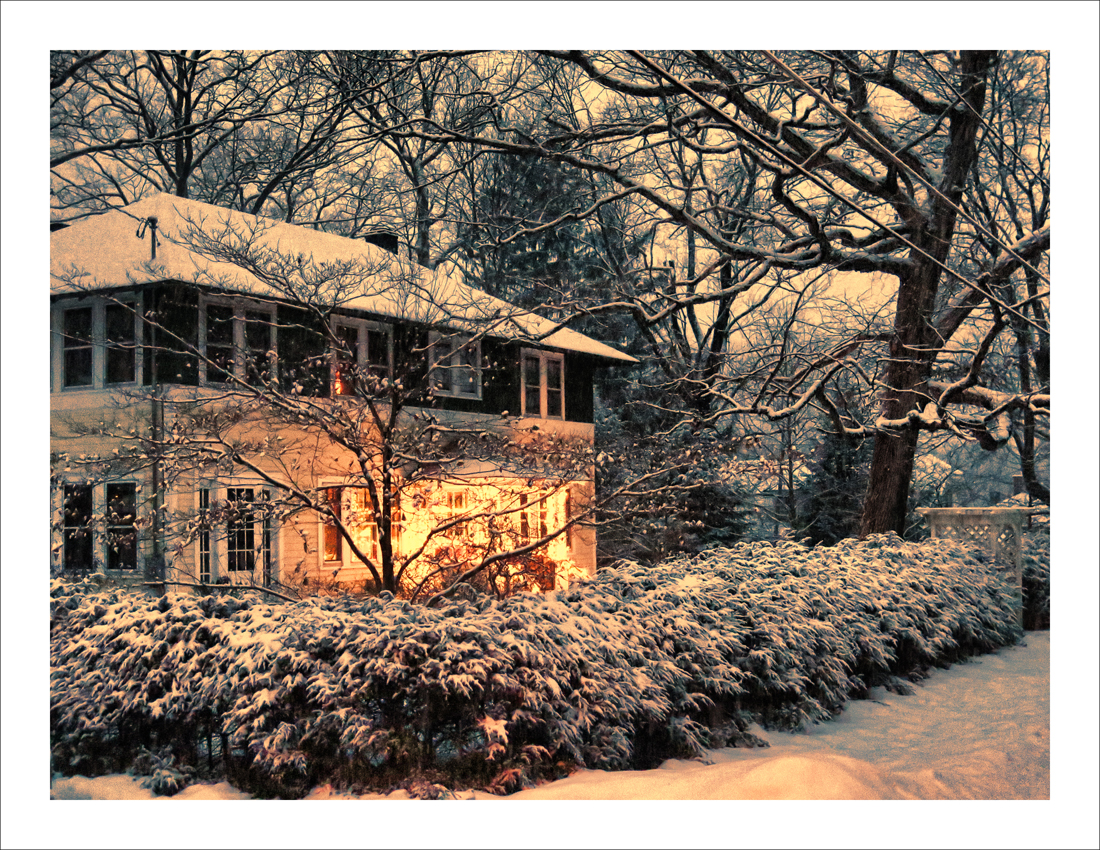
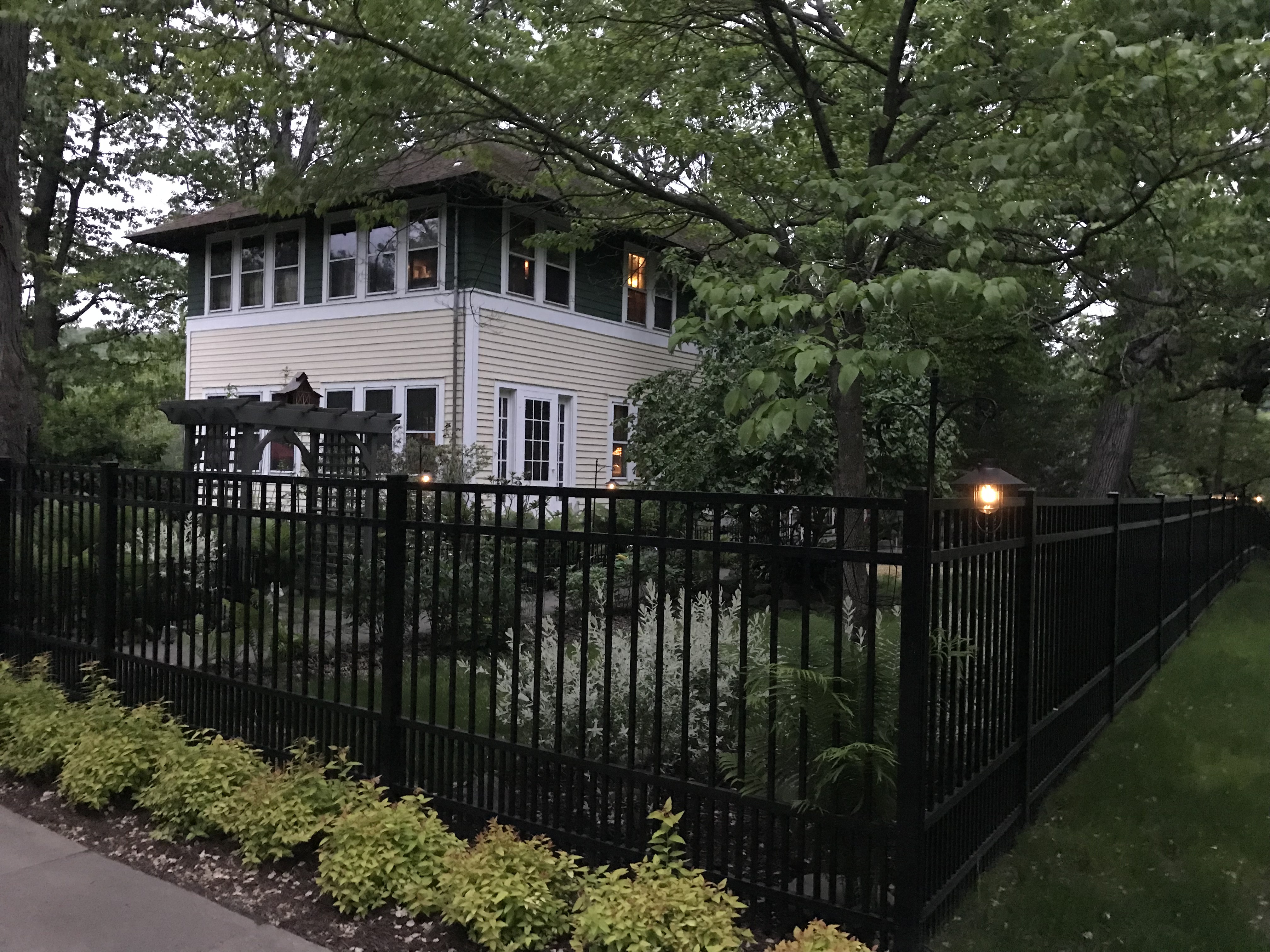
HENWOODIE IN WINTER: The snow finally arrived! Henwoodie now looks just like the cover photo here on my blog. We keep a cheery, cozy fire burning in the fireplace. Scout cannot get close enough to it and snuggles on the sheepskin rug sighing deeply with contentment. Of course, he likes his treats brought to him so that he doesn’t have to leave his warm spot. Maddy, of course, likes to be buried as deep under a pile of fleecy throws as she can get. Her treats are slipped to her underneath the throws. Fergus, Peedie, and Sophie stake out the back of the wide leather sofa so that they can watch all the coming and going in the house. And be easily accessible for treats. Bridey has to be on my lap, in my lap, snuggled up to me as close as she can get. She is a loving wee pup and has to have her kisses every half hour. She climbs onto my chest and put her front legs on either side of my neck and presses her face against my mouth to be “nuzzled” noisily. Thankfully, Molly and Gabe like to stretch out on the carpet and be fussed over every now and then.
Gabe is thrilled with the snow and wants to be outside every 15 minutes. He is the Guardian of the wee pups and won’t come in unless ALL the little ones are inside. I always know if I have left one of the little pups outside because Gabe will not leave the front porch.
Christmas music fills the house—both medieval traditional carols as well as Barbra Streisand singing about her traditional Christmases of days past. Strange mixture, I know, but it’s Christmastime. The fragrance of hot gingerbread wafts through the house. Wintertime is gingerbread time. I made certain to leave boxes of gingerbread mix at John’s house so he can have hot gingerbread too!

Winter is the time of year when I am at my most productive as both a writer and illustrator.  I like watching the snow falling outside while I am snug and warm with the pups inside.  Somehow the snow inspires ideas and energy to write my fingers off and draw and paint like a possessed elf.
Ah, winter!  So, happy winter, think snow, get out and play!
Influences in my writing

Standard

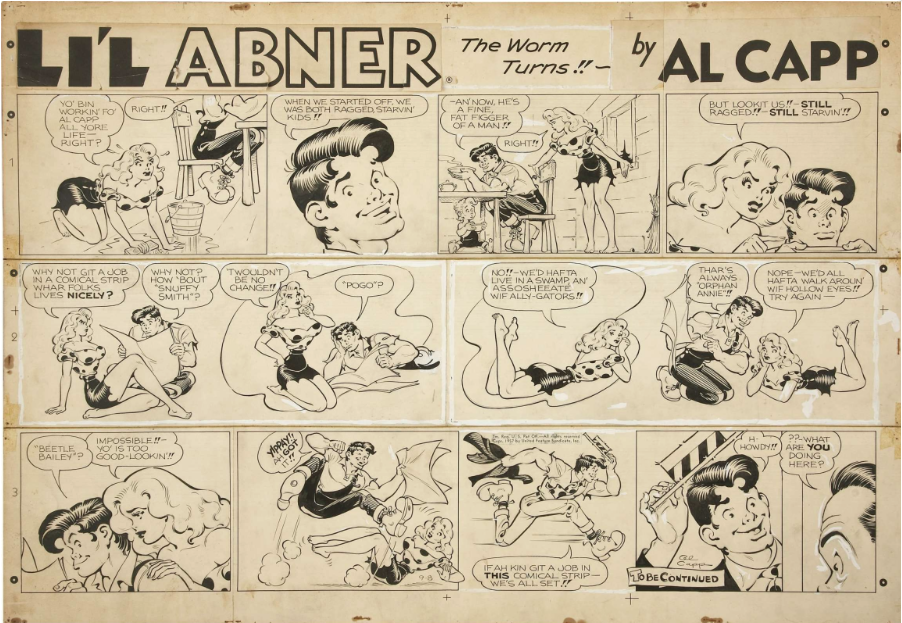
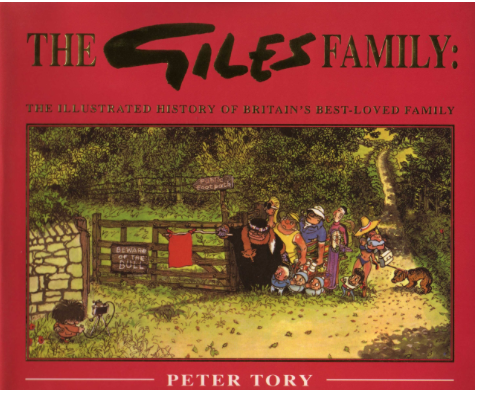
Screen Shot 2014-12-09 at 3.59.01 AMScreen Shot 2014-12-09 at 3.53.54 AM    Screen Shot 2014-12-09 at 4.02.25 AM

For some strange reason I’ve been thinking about the strongest influences on me as both a writer and illustrator and how these influences came to shape the creation of the Wythe family in “Wythe’s End”.

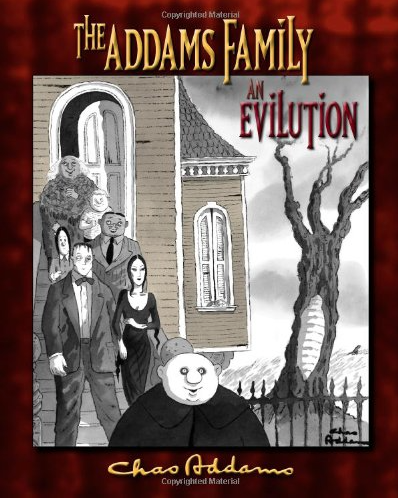
The above three pictures shows the three strongest influences (not including J.R.R. Tolkien and Beatrix Potter, of course).  What these three pictures have in common is that they focus on eccentric, wildly eccentric families and their quirky, loving, ordinary, extraordinary, peculiar and exacting lives.  Throughout my entire career as a writer I always wanted to create my own quirky and eccentric family.  It only took me fifty years to finally do so.

It is easy to see parallels and influences in my writing and characters if you study these three families: The Yokums, The Giles, and The Addams Family.  Where the Wythes differ is simply in locale and number of eccentric family members.  Wythe’s End could be seen as isolated and haunted as the Addams’ mansion.  The groundskeeper Russ Samson could be compared to the butler, Lurch, in the Addams family.

What I love most about these three influential families is the strong personality and quirks of each and every family member.  With this in mind I strive to make each member of the Wythe family as distinctly unique, believable, true to their nature, and each with their own ‘quirk’.

Once the characters came into my head and their personalities became clear writing dialogue for each character was easier than I ever thought it might be.  Because each character is so “real” their voices, how they would say something, what they would say, how they would react in any given situation, allows me as a writer to let the characters speak for themselves.  It’s a strange situation, really, to just let the characters speak and not try to put words in their mouth.

I have my own way of speaking and the only character that I hear my own voice coming through is the narrator, Phineas Wythe.  Phin is me when I was his age.  He thinks and talks and acts almost exactly as I did when I was that age.  He has the same worries and fears that I had when I was fifteen.  The only difference between Phin and me is that I grew up in poverty and he grew up (is growing up) in privilege.

I suppose the real test for me as a writer is to imagine what it must be like to grow up privileged, never having to worry about money, having domestic help, etc.  In fact, the Wythes never think about money at all.  It’s just there.  Period.  And this lifestyle fascinates me.

However, in spite of the fact that the Wythes are very wealthy their wealth and privilege never makes them unsympathetic to the plight of others.  They are generous to a fault, loving, caring, and the most liberal minded wealthy family I could imagine.

In other words: I’m combining my outlook in life with their wealth and am letting the two worlds merge that set the Wythes apart from other Boston blue bloods/Brahmins.

They are eccentric because they have a zest for life, for fun, for adventure, for travel, for literature, and for making a difference in the world through their hard work and talent.

I’m obsessed with quality higher education so it was important to have each and every Wythe attend Harvard or a school of equal high status standing.   Naturally, after graduating from Harvard each and every family member would travel and study abroad to broaden their perspective on life and appreciate how other cultures exist.

Hopefully, Li’l Abner and his family, Lurch and the Addamses, and the Giles family would be interested in knowing the Wythes.

One Moment

Standard

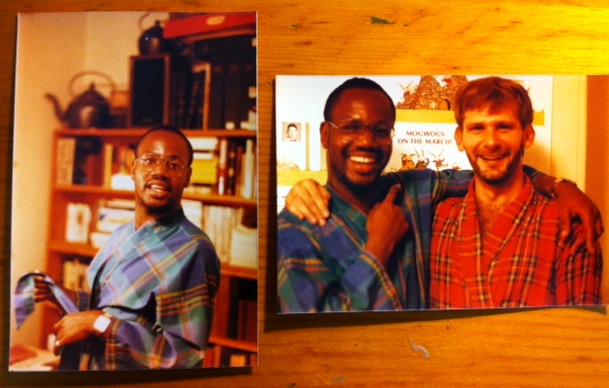
Wayne and me

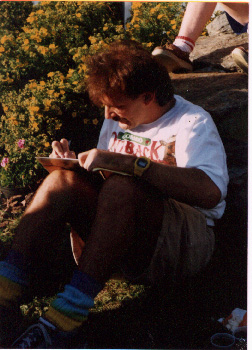
The photos show me and my best friend, Wayne, when we were both young, hopeful, enthusiastic about being writers, and never thought we would not succeed in our goals to become writers.

Wayne died twenty years ago.  He was my best friend, my best editor, my best/worst critic, and someone I will never ever forget.

Whenever I feel uncertain about my writing or lack confidence for whatever reason I can hear Wayne’s voice in my head “Bitch, stop whining and just do it!”  And I usually do.

Several years ago I heard about a short story writing competition on NPR.  The rules required that you use five certain words and could not write more than 500 words (I think).  Never having done anything like this before I wrote a short story reflecting on the time I was diagnosed with colon cancer.

The story is titled: One Moment

The bare trees huddled close to the wooden house as if to warm themselves from the cheery glow coming from the kitchen window.

Sitting in the kitchen the man stared out the window, thinking.

A fly softly buzzed against the glass seeking its own freedom from his thoughts.

The man picked up his mug of coffee and sipped it without taking his eyes off the trees standing stark against the steely sky.

It was 3:14 in the morning.

The world was hushed and silent as if waiting for something to change.

Something to alter his reality.

Something to make his reality not be.

On the kitchen table sat a small plant.

A winter primrose.

As if unaware of the shift in reality the primrose bloomed bright with yellow flowers. Cheerful and calming as all primroses are.

The fly grew bored of buzzing against the glass and settled on the leaves of the primrose exploring the surface hopefully.

Hope.

I am the eternal optimist, the man thought.

Optimism springs eternal.

Or is it hope springs eternal?

How could this moment be his reality?

The eternal question everyone asks at one point or another in his life. How and why. What had he done wrong?

It had to be a trick.

A trick of the machines.

A trick of the light.

A trick of his hearing.

He must have heard wrong. That had to be the answer.

What had Gertrude Stein said before they wheeled her into surgery?

What is the answer?

And when no one answered she said the most oft repeated line of her career: “In that case, what is the question?”

What is the question?

The man had no answers.

No questions either.

Just the silent reality of the warm kitchen.

The man stood and pressed his forehead against the cold glass that kept the outside world at arm’s length.

He put his hand in his pocket and fingered the bone button that he always carried for good luck.

The button had failed to bring him the good luck he needed most a few hours ago.

A lifetime ago.

Twelve hours ago.

The man took the button from his pocket and held it between his thumb and forefinger.

The smooth texture brought back a flood of memories.

A night in an ancient burial mound.

The discovery of his first skeleton lying on its side, undisturbed.     Unaware.

His reality was that he was too aware.

Too discovered.

Outside, the bare trees shuddered in the wind and scratched at the window with their bony branches.

Scritch. Scritch. Scritch.

The sound brought back memories that would haunt him for the rest of his life.

It would be a brief haunting he thought.

But why now?

Why me?

It made no sense.

Reality made no sense.

He had too much to do.

Too many things to finish.

The fly buzzed back to the window. Desperate to get out, not be trapped in this man’s reality.

But, what was his reality?

His reality was one month.

One month to tie up the loose ends of his life.

The man’s gaze settled on the primrose and he smiled.

How could something so humble bring so much joy?

It was the same with the bone button he always carried in his pocket.

It brought him peace of mind and held all the memories of his life.

The button made him remember.

The button made him forget.

The diagnosis made him regret.

Cancer.

One word.

One diagnosis.

One button.

One fly.

One plant.

One last trick.

Outside the kitchen window the bare trees stood still holding their breath.

Wythe’s End

Standard

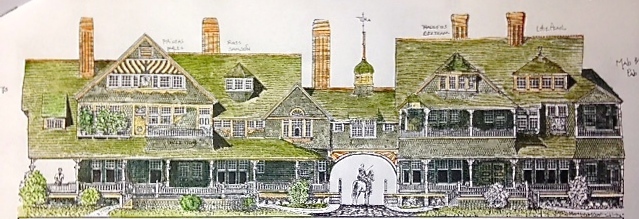
Wythe's End Front 1

I have more or less worked out exactly HOW the house called Wythe’s End will appear as a character in the novel.  A house has always felt alive to me.   Our house, Henwoodie, is 100 years old.  I have never lived in, nor could live in, a “new” house.  I like to feel the character and history of a house.

I haven’t written any new chapters recently due to our travel schedule and still being in Dearborn looking after John after his nasty fall on the ice.  BUT…I am revising the beginning of each of the 18 chapters already written to include the opening passages that center around Wythe’s End in order to set the tone and mood of the event(s) to be revealed in any given chapter.

It’s difficult NOT to write new chapters but until I finish another book deadline first I cannot, in all good conscience, allow myself to sit down with the Wythe family and catch up on all their activities and escapades.

I have also been watching a lot of old movies (film noir) just to be immersed in the wonderful story lines and settings.  One of my favorites is: Alfred Hitchcock’s “The Lady Vanishes”.  This film, like Agatha Christie’s “Murder on the Orient Express” appeal to me simply because a great deal of the action takes place on a train!

When I first ventured to Europe in 1972 train travel was still mysterious and exciting and downright thrilling!  I loved the old individual first class compartments that felt like safe rooms separated from the Outside World.   I did quite a bit of writing on trains in Europe and the UK when I was young.   There is something about the gently rocking motion of the train and being in a confined space that sparks the imagination.

Naturally enough, in my ‘larger’ writings there is almost always a train that makes an appearance.  And in the case of “Wythe’s End” a narrow gauge private railroad plays an important role in the story as well.

I don’t travel by train in the U.S. because it’s not all that romantic or private.  There are no First Class comfortable compartments with wood paneling and soft cushioned high back seats.

I drive one of the original Scion XB automobiles that I like to describe as a small “Belgian bread truck” kind of vehicle.  I’ve driven this car for nearly 10 year and because we still commute back and forth between upstate New York and Dearborn, Michigan, it has come to feel like my own private First Class compartment for me and the pups.

Of course, I have to pay more attention to the actual driving, but the long drive back and forth allows me time to listen to wonderful audio books.   I can listen while I drive without being too distracted.

I suppose what this rambling post is all about is the fact that, in my writing, the setting, the place, the house, the train…is as important a character in a story as are the people (and animals). It would be impossible for me to NOT think of a old house or an animals as not having a soul, having feelings, and having an affect on the other characters.

I hope I am successful in bringing Wythe’s End (the house) to life as I feel I have been with the people and animals that love the house as much as I do.

Reading does prompt writing

Standard

ODwriting

I always quote Gertrude Stein when it comes to talking about my writing:  “I write for myself and strangers.”

Most of my friends and family have never read anything I’ve written.  And if they have it’s only after outright direct threats from me to get them to read something that I wrote.

I write the kind of stories or books that I WANT to read.   So many books are really good but there is always something missing: details about an interesting house, details about an encounter, etc.

I’m reading a good murder mystery set in Provincetown and there are so many problems with the writing.   What I call “fade to black.”  The writer builds up to an intense personal encounter and then writes “The next morning I felt bad about what happened.”   But… what happened?????  The odd thing about t his writer’s book is that he goes on way too long with so many other details that only bog the story down and add nothing to the reader’s insights.

James Fenimore Cooper wrote and published his first novel, Precaution, in 1820 in response to his wife making a wager with him that he could write a better book than the one she was reading.   And he did.  He went on to write the wildly successful and widely read Leatherstocking series, including The Last of the Mohicans in 1826.

When I write I write the details and description and action that I would like to read or hear about.   I often write far too much, but I’d rather write too much and then go back and cut sentences, paragraphs, pages out than to try to go back and pad out a scene or chapter.

In order to do this I do have to let the writing “sit alone” for awhile so that when I go back and reread what I’ve written and I can more easily see what needs to be cut.  Another technique that I do (and am a firm believer in) is to either record myself reading what I’ve written out loud or even making a video of me reading the writing out loud.  If I find myself stumbling over a passage or if the words don’t flow smoothly and easily as I read them, then something is wrong with the writing.

It really is a great way to “hear” the words and what isn’t working.

I am a relentless editor.  Not only with books I read by other writers but with my own writing.   I love what I write but I’m not so enamored with my own words that I can’t bear to be an objective editor (most of the time).   Writing is fairly easy to do.  Rewriting, revising, and editing is the hard part.    But it is in the rewriting and revising that the words really do shine (if they survive) and the story comes to life.

The only aspect of rewriting and revising that I have to be careful with is to not lose the original spontaneous, natural storytelling quality in the writing.   Sometimes the first words are the best.

Working at the drawing board

Standard

Ollie at drawing board 2012

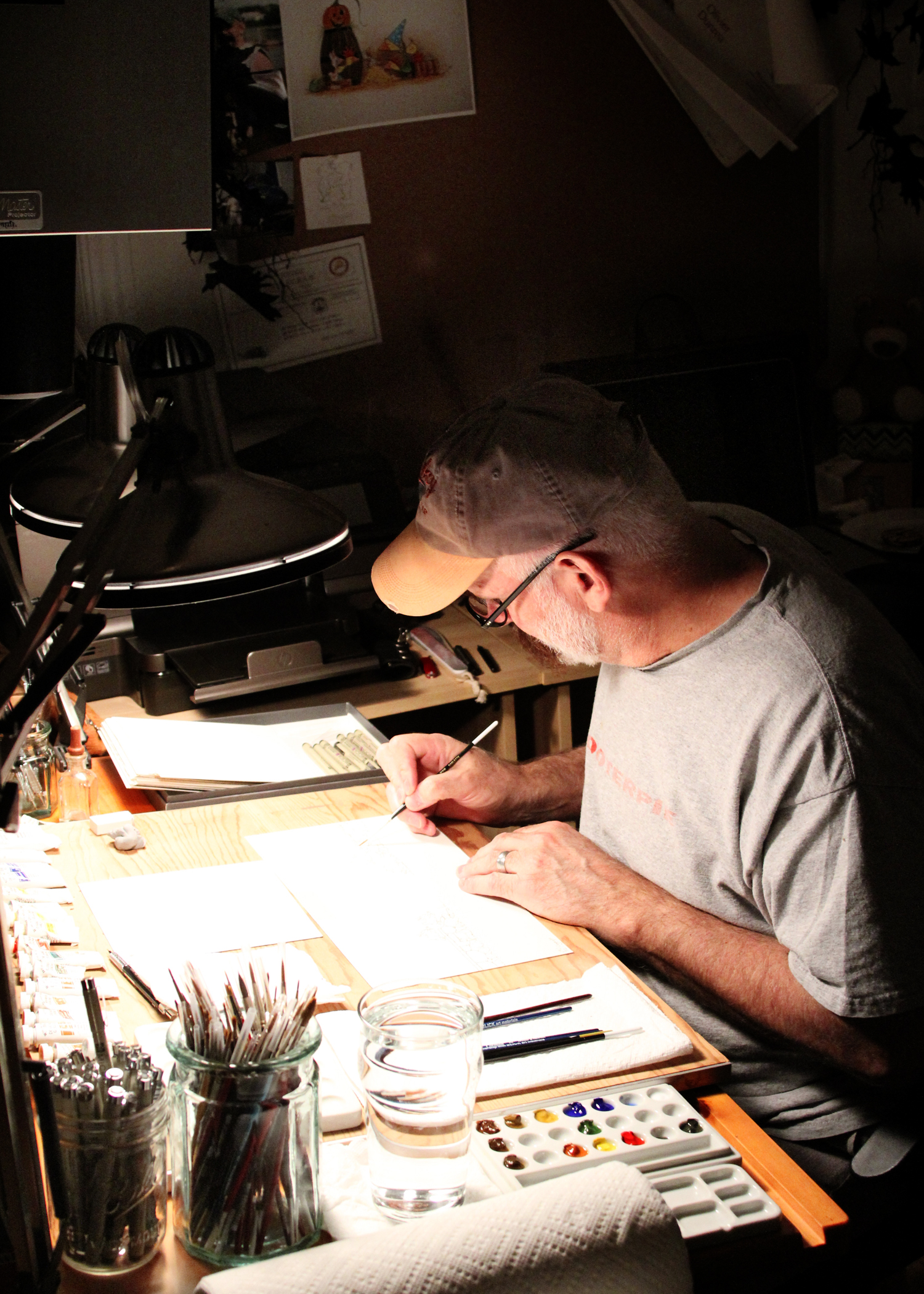
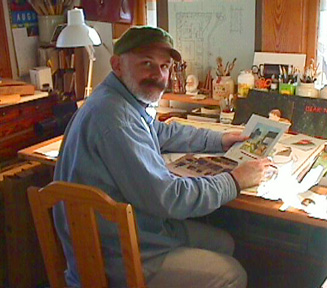
Tapping away at the keyboard is not a terribly exciting thing to watch or capture in a photo.  Instead here’s what working on an illustration looks like.  This photo shows me working in my studio at John’s house in Dearborn.

A Ollie antiquing map March 2010

When I draw and make medieval maps this is the “antiquing” process.  The original map is usually much smaller.  I have a photocopy enlargement made (18″x24″ or 24″x36″ or 36″x48″) and then proceed to stain it, distress it, paint it, etc.

Daytime 4

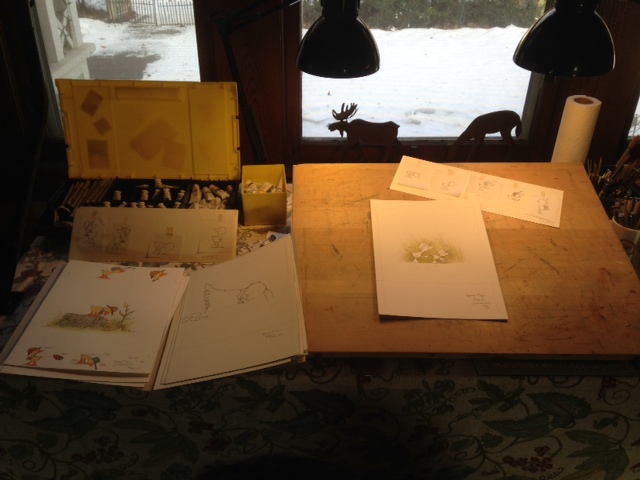
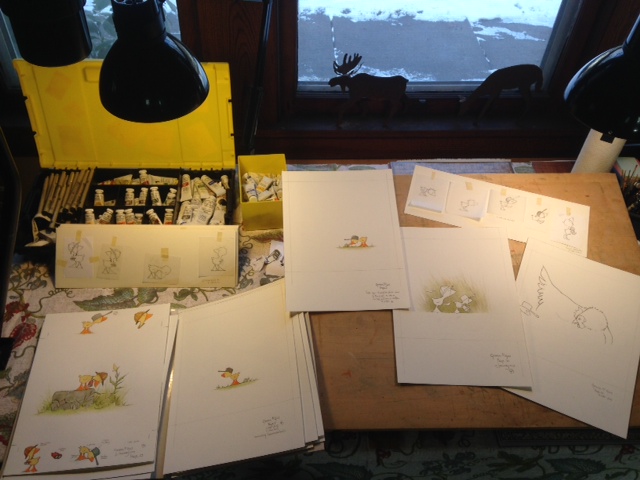
Back in January, when our Spring Spaniel, Molly, had leg surgery and could not go up and down stairs, I simply moved my studio drawing board to the living and camped out there for six weeks while she recovered.  We kept a cozy, cheery fire burning in the fireplace and Molly was happy as could be.   This photo shows the finished artwork for Gemma & Gus in progress (this book will be published March 2015)

Daytime 7

Illustrations being worked on.

ODstudio BEST

Me at the drawing board in the studio at Henwoodie.

4%22 Box

This is the original handwritten journal that I wrote when I was seventeen years old and old photos of me as a teenager.  The box contains the printed manuscript for my novel: 4″

The novel is based on this journal.

Prologue to Book One: The Secret Book of Moolstery

Standard

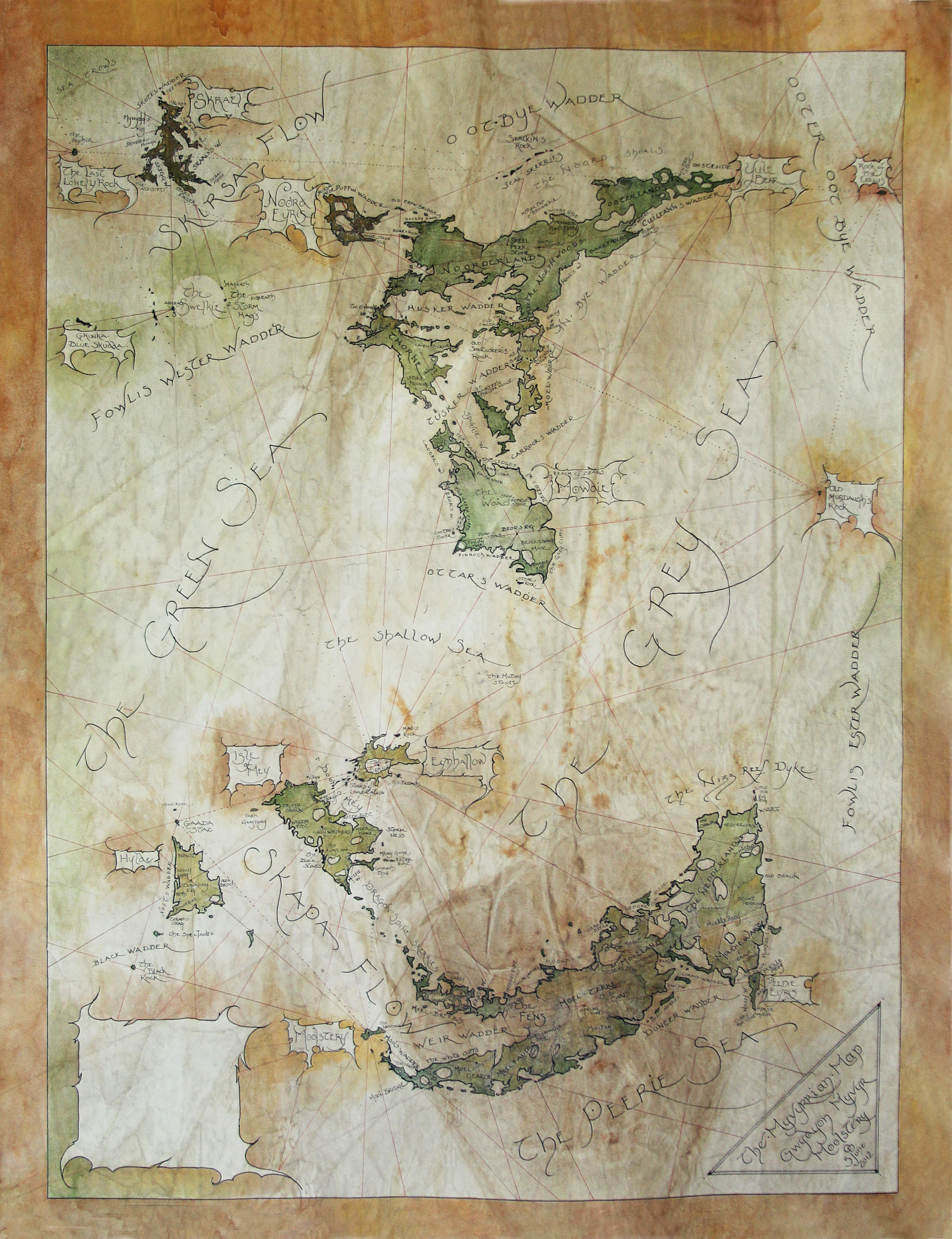
A Myvyrrian Map  5 June 2012I finally posted the Prologue to Book One: The Secret Book of Moolstery in the Lay of Moel Eyris: The Saga of the Bear’s Son mythology/heroic quest to my website!

This is a rough draft and will be revised and rewritten and edited before final publication in the book.  I thought that readers might find it an interesting piece.  Hopefully, there will be feedback.  I am curious as to what readers might think of the style of the narrative.

Website:  olivierdunrea.com

Writing every day

Standard

Bookcase in library Studio Library

When I was twelve years old I started writing my first journal.  I have kept on writing almost every day ever since.   Nowadays I maintain both a professional and personal journal as well as Writing Logs to chronicle ideas when they come in regard to any particular story or book I am writing.

All through high school I wrote compulsively in order to stave off loneliness and the utter feeling of being totally isolated.  We lived in the countryside and I had no close friends except my younger brother.  He wasn’t much of a reader but he was my best friend.

Writing was what I did to collect my thoughts, try to figure myself out, where I was going, and how I was going to get there.  For example, the first thing I wrote when I was twelve years old was “My Life Plan”.  I literally outlined what I hoped my life would be and what I would have to do to live the life I wanted to live.   Believe it or not, I have stuck to that Life Plan pretty much for almost fifty years.

I had outlined short term goals as well as long term goals.  And I have achieved nearly every goal I set out for myself.  Now, that doesn’t mean I didn’t take some wrong turns or get muddled at times along the way, but for the most part, I stuck to the course I had set for myself.

Today I find myself still writing compulsively every day.  Emails, tweets, this blog, journals, stories, books, website, etc.  Thankfully I’m a fast typist and the actual mechanics of writing takes no time at all.   I simply start writing (typing) and then save whatever happens to come out of my brain and into the computer.

Writing every day helps me not be afraid to string words together and let them go where they will.  It’s an exercise, of course.  The one great thing for writers is that the Internet often allows reader to respond and react to the writing, the words.

Most writers write in total and complete solitude.   It’s the only way to really live with your words and immerse yourself into the story.  Gertrude Stein wrote “An audience is nice but should not be necessary.”   She’s right, of course.  I really do write for myself pretty much.  But, obviously, as a professional writer it is important to let others read the writing at times.  How else would I be able to make a living as a writer?

My mother’s dream for me was to get a job as a waiter in a fancy restaurant and earn big tips.  I could never quite get  her to understand that I wanted to be a writer, not a waiter.  One letter in a word makes all the difference in a person’s life.  Especially a writer’s.   My dream for myself was NOT to be a waiter.  I don’t like waiting on people.  But I do like writing.

I’m not certain whether anyone reads this blog or not.  I don’t even read the entries after I write them, I must admit.  For me this blog is more or less a public diary.  I’m taking the chance to let others see how my mind works as a writer, where my thoughts come from, and how the writing takes shape and becomes a story or a book.

It’s not an exciting process, I’ll admit.  But it’s the honest, true-to-life process as to how I live and work as a writer.

An Idea for Wythe’s End

Standard

Henwoodie Christmas 2013 2

‘Henwoodie stood quietly in the snow.  Evening was falling.  The front porch light had been turned on and gave the silent house a warm welcoming glow to anyone who might pass by.  The house held its breath, waiting for the snowstorm to begin.’

Many, many years ago I was involved in an intense email correspondence (the emails are being turned into a book about a desperate romance between two people).   Each email that I sent began with a description of the weather outside my window at the time I was writing the email.  Just a few lines to establish the mood and tone of the email.

I went back and reread quite a few of the emails and the technique really works well.  My thought is to do the same thing with each chapter in “Wythe’s End”.  In that the house itself (Wythe’s End) is a much a character in the story as the people I thought it would be a great way to keep the house in a prominent role throughout the narrative.

These opening lines won’t detract from the main focus of the content and will provide a logical thread between chapters.  If it doesn’t work I can always take it out.