Eric Hemmers: Ever since I first met children’s book writer and illustrator, Olivier Dunrea, many, many years ago, I have been fascinated by his stories. He seems to have an endless supply of them and I have been fortunate that he has agreed to sit down with me over a period of several months in order to answer all my questions regarding how he works as both a writer and illustrator as well as gaining insights as to where his ideas come from. Olivier’s gentle, and sometimes off-the-wall, humor is something that stays with a person for a lifetime. At least it did with me.
Olivier, what I remember most about you that very first time I met you when I was a young boy was your seemingly boundless energy and enthusiasm for what you did, everything you did, and how you shared your life and laughter with everyone you met. It’s difficult to believe that you live such a quiet, reclusive life now and have disappeared from the public’s eye. I know that you haven’t granted any interviews in twenty years and I appreciate your taking the time to let me bombard you with even more questions about your life and work. I appreciate it very much.
Olivier Dunrea: Eric, I am more than happy to answer your questions and I appreciate your interest, believe me. Not all that many people are interested in the behind-the-scenes aspect of a children’s book. I must admit that I really am more reclusive, and always have been most of my life, but when I was younger and needed to support myself doing book signings, speaking at schools and conferences really did bring in much needed income. It’s tough being a fulltime writer and illustrator, especially at the beginning of your career.
I always told my audiences that I earned more money talking about what I did than doing what I do. And that is a very true statement.
So, where do you want to start this conversation?
EH: I remember you telling us that when you came to my school! We all thought that you were a rich and famous writer and wanted to be just like you. One boy asked you outright how much money you made and I’ll never forget your reply. You told him that you did what you did because you loved doing it and not for the money. And in typical Olivier fashion you told him that his weekly allowance was probably more than what you made as a published writer.
OD: [laughing] I used to get asked that question quite a lot. I think people think that ALL writers receive huge advances, millions of dollars, and they assume that all writers are just naturally famous right away. I felt it was important to let people know, especially children, that I didn’t write and illustrate because I wanted to be rich and famous (even though I wouldn’t have complained if it happened). I wanted to emphasize that writing, telling stories, making pictures was simply something that brought me great pleasure and was something I would do even if I couldn’t make a living at it.
I am one of the fortunate ones that has survived on my writing and illustrating without having to have a day job.
EH: Your books are now published all over the world. It must be exciting to think that children everywhere are reading your books and loving them. I wanted to ask you a simple question: Why goslings? When I first met you your passion was for chickens, pigs, and prehistoric Scotland. Where did you get the idea for creating the wildly successful Gossie & Friends series of books?
OD: Why goslings? Why not goslings? [laughing] I have always loved farm animals ever since I was a boy. Pigs, chickens, geese, cows, sheep, guinea fowl, you name it. I always asked for toy farm animals for Christmas when I was a little boy. I still buy toy farm animals to this day and have quite a collection. And I still build model medieval farms for them to have a place to live.
At the beginning of my career as a writer and illustrator my stories did center around pigs and chickens. Eddy B, Pigboy was my very first book to be published in 1983. I have always loved chickens and they appeared in most of my books as well. One of my books was dedicated specifically to a broody hen. Naturally enough it was titled The Broody Hen.
Geese made appearances in my early books as well from time to time. But, it wasn’t until I moved from Philadelphia to the western edge of the Catskills that I really began to focus on bears, chickens, and goslings.
EH: When did you move to the Catskills?
OD: We left Philadelphia at the beginning of October 1996. I finally felt that I could earn my living as a writer and illustrator without having to remain in a large city. It was scary, but I had to get out of the city and I had always wanted to live in the country. I really thought we would buy a farm, but that was more difficult than I had thought it would be.
EH: So you moved to the Catskills and began writing about and drawing goslings? Were there a lot of geese up there?
OD: [laughing] I had just finished the illustrations, or was about to finish them, for The Painter Who Loved Chickens just before we moved. Shortly after we arrived I received a phone call from a friend in Philadelphia who was also a writer and illustrator. In fact, he was half of a husband and wife team, David and Charlotte Yue. For some reason my name had come up when David and Charlotte were talking to their editor at Houghton Mifflin in Boston. The editor asked them if they could contact me and ask me if I might be interested in illustrating a manuscript that they felt I was the right illustrator to do the pictures for the book.
So, David called me and passed on the information. He had been reluctant to give my phone out to anyone and I was very grateful for his discretion.
EH: What was the book? And did you illustrate it?
OD: The book is titled The Boy Who Loved to Draw. It is written by Barbara Brenner. The book is about the 18th century artist Benjamin West. I had called the art director and was filled in as to what the project required. I have only ever illustrated books by other writers three times in my professional career.
EH: Wait, why don’t you like to illustrate books written by other people?
OD: Mostly because illustrating is very difficult for me. I am a white-knuckle illustrator that is terrified of making mistakes when I do the illustrations. And I have too many of my own ideas for stories and books that I never felt the need to seek out work illustrating other people’s books.
EH: So what was about The Boy Who Loved to Draw that made you decide to illustrate it?
OD: Eric, you are going to laugh. I was in panic mode after having left all my friends, family, professional connections, etc. in Philadelphia and the only reason I agreed to do that book was because I needed the money. I was nervous that we might not survive living so far away from a large city. At least in Philadelphia I knew I could always get a job as a waiter, office worker, doing massage…anything to keep afloat if need be. But having moved to a very small remote mountain village did make me feel a bit insecure as to whether or not I would be able to earn my living writing and illustrating with no safety net in place.
EH: Wow! I never would have thought of that. I just assumed you were a successful writer with no financial worries and could do whatever you wanted.
OD: Like most writers and illustrators I don’t think I will ever reach that point in my professional life where I feel 100% secure that I’m going to be able to pay my bills every month and not worry about money.
EH: OK, back to the goslings. Where did they come from? And when did you first think of writing and illustrating the Gossie & Friends books?
OD: Let me think…I did the illustrations for The Boy Who Loved to Draw that was published in 1999, I believe. The Painter Who Loved Chickens had just come out. And I wrote and illustrated Appearing Tonight! Mary Heather Elizabeth Livingstone.
The turning point came when I wrote and illustrated Bear Noel, which was published in 2000.
Like 1978 the year 2000 was a pivotal point in my career. I had no shortage of picture book contracts, but I really wanted to work on my magnum opus: The Lay of Moel Eyris: The Saga of the Bear’s Son.
But, to get back to goslings, someone had given me a tiny pair of red rubber boots. They were probably made for a doll or something. I have no idea why they gave me these little boots. They were sitting on the shelf that sits on my drawing board. I kept looking at these boots and then one day started sketching them and they ended up on a little gosling’s feet. I thought it was funny.
EH: Aha! That is interesting that you were working on so many other projects and these little red boots caught your imagination. How long did it take you to come up with the story that featured them?
OD: Eric, I am not one of those writers that agonizes over the words I write. I simply write them, string them together to tell a story, and that’s it. I tend to be very direct and to-the-point when I write (unlike how I talk, I tend to ramble on and on and on!). As I was drawing the little gosling wearing the red boots I started writing: This is Gossie. Gossie is a small yellow gosling that likes to wear bright red boots. Every day.
EH: And that was it? The story of Gossie came to you just like that?
OD: Pretty much. I just kept writing scenes as to what a little yellow gosling would do while wearing her red boots. Simple, every day things. I wanted to keep the gosling very gosling-like and not too anthropomorphic. I knew that this gosling would speak but I didn’t want there to be a lot of dialogue.
EH: When did you show these drawings to your editor? And which editor did you show them to?
OD: Gossie literally came to life in a matter of days. I put together a dummy with the rough sketches and words and called the art director I had worked with while doing the illustrations for The Boy Who Loved to Draw at Houghton Mifflin. I told him about Gossie and asked him if he knew an editor that might be interested in looking at the dummy and manuscript. The art director’s name was Bob, I don’t remember his last name. Bob said he knew just the editor that might be interested. She was young and had worked with Walter Lorraine.
EH: Is that name significant?
OD: It is. Walter Lorraine was an incredible designer and art director at Houghton Mifflin before being named Director of Children’s Books, a position he held from 1965–1995. He now heads his own imprint, Walter Lorraine Books.
EH: Who was the editor?
OD: Her name is Amy Flynn. She was young and had a three-year-old daughter at the time. I sent her a letter and the dummy for Gossie and waited with bated breath hoping she would like it.
EH: Did she?
OD: Amy showed that rough, rough black-and-white photocopy dummy to her young daughter, Lily. Lily absolutely loved it! So, Amy called me and offered me a contract for the book. I was thrilled! I told her that I was working on a companion book to go with it titled Gossie & Gertie. This book would pick up where Gossie left off and would focus on the close friendship between the two small goslings.
EH: That’s great! She offered you contracts for both books at the same time?
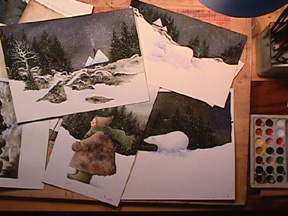
OD: That she did. The advances weren’t very large, but it was enough money so that I could not have to worry for a few months as to how I was going to pay the bills. I had started working on the finished artwork for It’s Snowing! for Farrar, Straus & Giroux. The artwork for this book was being done in the same style as that seen in Bear Noel—more painterly, more artistic, what I called my more serious illustration style.
EH: Do always work on several books at one time in the studio?
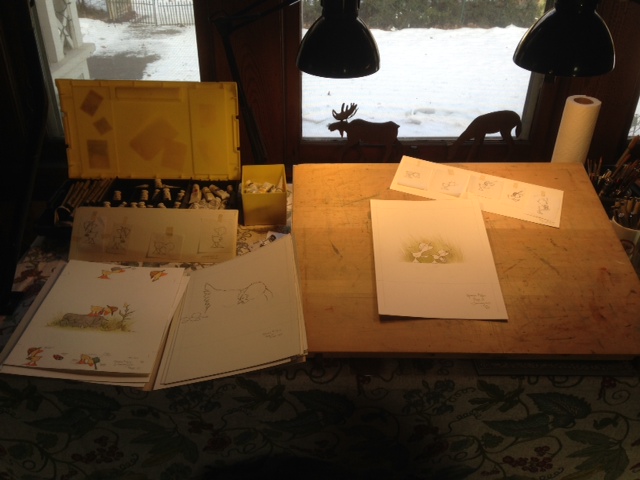
OD: Sort of. I always have a number of projects going on in different stages of development. For some the writing is finished, for others I have lots of sketches and colour studies, and then there’s always a book on the drawing board that I’m doing the finished illustrations for. I can’t keep drawing and painting the same characters over and over without some kind of break. So I work on other projects just to keep my thinking fresh.
EH: That makes sense, actually. But the editor, Amy Flynn, thought that the two gosling books would become big sellers?
OD: Not at all! They were to be simple, straightforward little books with lots of white space. I wanted the books to be 6”x6” square. Publishers don’t really like small books because they can’t put a large price on them. But, I felt strongly that the books should be small. I always think as to what Beatrix Potter had said: “Small books for small hands.”
The Gossie & Friends books are very simple stories for very young children. I wanted them to be as uncluttered as possible in design. The art director, Bob, had other ideas when we first started working together on these little books. He redesigned my layouts to include wildly coloured cartoon borders and “bouncy” cartoon type floating above the characters, going underneath the pictures, and just all over the place in the pictures.
I was horrified! This isn’t at all how I saw these little books. He and I were at odds as to how the finished books should look. I was insistent that the books would have lots of white space and that the simple text of the story would always, ALWAYS, appear below the art. I did not want the words to be part of the picture in any way, shape, or form.
EH: What happened? I mean, I know you got your way because the books look exactly the way you wanted them to, right?
OD: I was very lucky to have had Amy Flynn as my editor. She agreed with me. From the very beginning Amy and I just clicked and worked very well together as writer and editor. She instinctively understood what I wanted and she supported me. I was so relieved, let me tell you.
EH: I can tell that you are passionate about how your books look and are presented to the world. I never realized that you had to fight so hard to have a book be published the way you wanted it to be.
OD: Ah, Eric, the stories I could tell you about the battles I lost or the times I gave in believing that the editor’s judgment was better than mine. I was young when I first got published and I tended to let editors and art directors “guide” me all along the way to seeing my books published. A few of my favorite books were mangled and changed far beyond my original concept. I will never let this happen again, trust me. I know quite well how I want my books to look and be read.
EH: I can’t imagine you letting someone else have control over your creative work. But, it seems like you found the right editor for Gossie & Friends.
OD: Fate works in mysterious ways, as that old saying goes. Amy was the right editor. She never tried to change my concept or design for Gossie & Friends. And she knows exactly how to get me to stay focused on ONE concept per book. When I first wrote Peedie, the little yellow gosling that loves his red baseball cap and is forgetful, Amy called me and explained that I really should only introduce ONE concept in these little books. She said Peedie should be either forgetful or passionately love his red cap. The final solution was to have him to both, but I kept the emphasis on his being forgetful—he forgot where he had left his beloved red cap. Amy is one of the best editors I’ve ever worked with. She nudges me to think about a word or idea rather than dictate or demand that I change something. From the outset I had told her that I envisioned an entire series of little gosling books. Hence the “Friends” in the overall collective title. I also knew that if Gossie and Gossie & Gertie did not do well in the marketplace there would be no more gosling books.
And, you might have noticed that Peedie is dedicated to Amy’s daughter and son, Lily and Bobby. The very daughter that really was responsible for me getting the first contract for Gossie.
EH: That’s terrific! I had wondered who Lily and Bobby were. I think it’s great that you dedicated a book to your editor’s children. It sounds like you and the goslings were on probation and under a lot of pressure to prove yourselves!
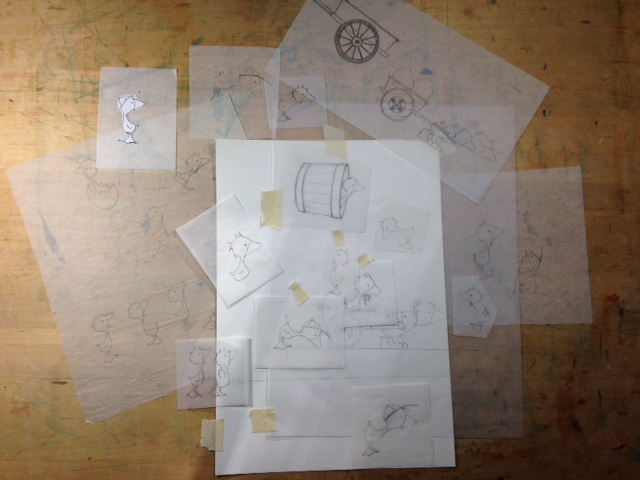
OD: No, I didn’t feel that way at all. Eric, to be honest, I did ALL the finished illustrations for those first two Gossie & Friends books in two weeks! Two weeks! I worked night and day. Remember, the art is very simple and uncluttered. I drew all the layouts first in pencil, then did all the inking, and then all the painting. I’d never worked this way before. I knew that it was important to keep the characters and colours as consistent as possible and this was the method that worked best fro me and these little books. Also, I don’t like to overwork or overthink a story or an illustration. I can easily spend way too much time on a picture and absolutely ruin it.
EH: When did those first two books get published and when did you know that those two books were a hit?
OD: Gossie and Gossie & Gertie came out in 2002. And they made a big splash (no pun intended) as soon as they hit the book stores. Sales were strong from the outset and Amy had called me right away to ask if I had any more gosling books in the works. I told her that I was working on a quirky, headstrong little gosling named Ollie. I had decided in my mind that there would be a gaggle of thirteen goslings—a baker’s dozen—for all the books, if the series did indeed come to be. And I knew that not all the goslings would be yellow. I didn’t worry about being politically correct, I just knew that I would get bored drawing and painting only yellow goslings. And if I would get bored, readers would probably get bored, too.
EH: That’s why you have brown, blue, yellow, white, grey, and black goslings in the series. Just for variety?
OD: Exactly! As a writer and illustrator it’s more fun working with a variety of goslings that are not only different colours, but different sizes. It gives me a lot more room to play with the dynamics and relationships between them. Some are best friends; some are brother and sister, and so on.
EH: How did you decide on the personalities of each gosling? I know that the reviews I’ve read all seem to praise your accurate assessment and understanding of the two year old mindset. Is this true? Do you know a lot of toddlers and test out your stories on them to see what they like, what they respond to best?
OD: Good grief! NOT at all! It does amuse me that people think I have this built in understanding of the toddler mindset. I really don’t. I simply write stories that I like, that I find funny, and like to feel engaged with. And when I do the illustrations I am simply trying to make the most interesting layouts/compositions that I can that will look interesting on a white page in a book. To me, it’s all a matter of problem solving.
EH: But, each gosling has such a distinctive personality. Whether it’s being a bit bossy, obsessed with food, or being very quiet. Do you just make up their personalities in your head?
OD: Not exactly. Here’s the secret of the goslings’ personalities: each gosling is based on one of our dogs’ personality. We really did have a cocker spaniel named BooBoo that was obsessed with food and eating. She was the most overweight dog we’ve ever had. We could not deny her all the food she wanted. We are very involved with shelter dog rescue and each of our shelter dogs came to us thin and hungry.
EH: I knew that you had a number of dogs and had read on your website that you were involved with rescuing shelter dogs. So the goslings are really our dogs in disguise?
OD: Pretty much. And a few of my friends as well. Ollie is based on my best friend, Wayne Wright. Wayne died just before we moved away from Philadelphia. Ollie is my homage to him.
EH: Did you have the structure in mind for the entire series when you started writing and illustrating Gossie & Friends?
OD: Yes, I did. Because the books are small in size Amy and I thought it would be a good idea to have two companion books published together at the same time. And it works. The first two books are Gossie and Gossie & Gertie. Then came Ollie and Ollie the Stomper. Next was Peedie and BooBoo. And so on. I think the only book that was published by itself was Jasper & Joop.
EH: I love the names of the goslings that you come up with. Any insights as to where you get the names from?
OD: I wanted all the names to sound like names that goslings would have. The names should be short and friendly. If that makes any sense. I knew that the letter “G” would be a letter that a number of names would start with. The other names just seem to fit.
EH: What are all the names of the goslings in the series?
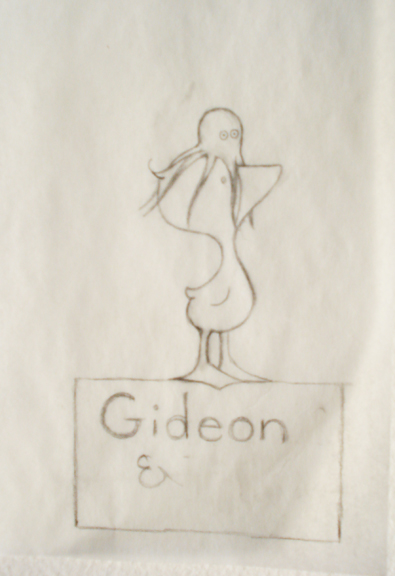
OD: Gossie, Gertie, Ollie, Peedie, BooBoo, Gideon, Jasper, Joop, Gemma, Gus Ruby, Roofus, and Pearl.
EH: I can tell you have those memorized!
OD: I do. I live with these goslings every day. They really have taken on a life of their own, with or without me.
EH: How did they come to be published in other countries around the world? Was that your idea or your publisher’s?
OD: Honestly, I had nothing to do with the subrights sales of the books. That is handled entirely by my publishers and their subrights managers. I only have to give my permission once an offer from a foreign publisher comes in.
EH: How do you like working with foreign publishers? Do you do all the translations yourself?
OD: I don’t work directly with any of my foreign publishers, except one—Gottmer in the Netherlands. I don’t do any of the translations for the books. I leave all that to my editors and publishers to make sure that the translations are the best they can be.
EH: Why do they change the name of your characters when the books are translated into other languages? And how do you feel about that?
OD: There are various reasons that foreign publishers change the names, as I learned over the years. The principal reason seems to be that the original name in English might mean something else or sound like something else (and not flattering) in another language. For example, Ollie was problematical because my French publisher thought it sounded too much like ‘au lit’—go to bed. And my Dutch editor explained that Gossie in Dutch sounds too much like a not-so-nice word in Dutch.
EH: Have you ever not liked a name change for your characters for some reason? And why do you only work directly with your Dutch publisher?
OD: Yes, I will admit that some of the name changes I was not at all happy with. But, I’ve gotten used to them. For example, I was horrified when my French publisher changed Gossie and Gertie to Lola and Olga! I asked for an explanation and requested that no name changes be made without consulting with me first. Just as a courtesy.
And the reason I work with my Dutch publisher is this: I met them in person in February 2014 when I had gone to Belgium to visit the Hergé museum. I felt that since I was so close to the Netherlands that I should make some effort to at least meet my Dutch publisher and editor because they do so many exciting projects with my books. And my books are strong sellers in the Netherlands.
EH: What was it like to meet one of your foreign publishers?
OD: It was great! They do so much on my behalf and made me feel so welcome. My editor knows that I love speed skating and had been following the Dutch speed skaters at the last Winter Olympics. They wanted to get me an official Olympic Dutch knitted cap. But, they weren’t available. My editor had a woman knit me a Dutch Olympic hat just like the ones the athletes wore in the Winter Olympics! I was thrilled!
I can’t produce the Gossie & Friends books fast enough so my Dutch publisher comes up with a number of interesting editions for my books to keep the buyers happy.
EH: What sort of editions?
OD: They produced a stuffed toy Gossie/book combo package for example. And the stuffed Gossie is perfect! They had a vinyl bathtub edition made as well as printing two-books-in-one that could be sold at an affordable price. They produced boxed sets of miniature books that parents could by as party favors. Two of the most exciting things they are working on is a puppet show based on the books that will be performed in the Netherlands. And they had the most talented Dutch singer/songwriter record the official Gossie & Friends theme song. Her name is Ageeth de Haan. Her voice is THE perfect voice that fits the books and characters.
Ageeth and I have become friends and worked together on the English version of the song. You can hear her singing the Gossie & Friends theme song at my website. I have heard other actors and readers record my books for audio CDs or videos and I haven’t been all that wild about them. But, Ageeth’s voice is perfectly suited for the goslings.
Gottmer hopes to work on animated versions of Gossie & Friends and will use Ageeth’s song to introduce them.
EH: Wow! That is exciting! Your books aren’t just published in other countries but there are some interesting projects in the works as well.
OD: Exactly! And I couldn’t be more pleased. It’s why I say that the goslings have a life of their own with or without me. They have exciting things happen to them that has nothing to do with me! And it’s the same for Old Bear and Little Cub. They are taking on a life on their own as well. But, we’ll save talking about them for another time.
EH: So, since 2002 the goslings have been a big part of your life. Are you as excited about them today as you were when you first created them?
OD: The goslings keep trying to take over my life, believe me! Yes, I love the goslings and as the series progressed I did get better and better at designing the books and doing the layouts. At least I think so.
By the way, in 2005, I think that was the year, the first Hollywood studio came knocking on the door interested in the movie, tv, and DVD rights to Gossie & Friends.
EH: Wow! Really? That is exciting! Is there going to be a Gossie & Friends movie?
OD: You never can tell. But, what was interesting was the fact that I had kept all the licensing, movie rights, etc. for myself. The subrights manager called me when Sony Columbia Pictures contacted her regarding whether the licensing rights were available for the series.
EH: What happened?
OD: The subrights manager and I had a long, intense discussion about it. I told her that another production company in Hollywood had already contacted me and we were talking about optioning the movie/tv/DVD rights.
She asked what it would take to get me to turn the licensing rights back over to Houghton Mifflin. It’s too complicated to try and explain it all to you now, but I did, in the end, wind up signing the rights back over to Houghton Mifflin.
EH: Are you happy that you did that? She must have been a pretty persuasive subrights manager.
OD: [laughs] She was. And, considering the bigger picture, I got quite a bit in exchange for giving the rights to my publisher. And, to be honest, I really did think that their Hollywood agent, legal team, marketing people, and subrights people would do a much better job at negotiating a deal than I might have been able to do.
Not to say that I don’t think I couldn’t have handled it all, but I was a bit relieved to let them deal with the nitty gritty negotiations.
The only thing I asked for was final approval on any and all design and licensing decisions. My editor, Mary Wilcox, is terrific about keeping me up-to-date on anything that comes along.
EH: It sounds like there is a lot of trust involved on your part. You really turned everything back over to them to handle for you?
OD: Yes, trust is one of the most important things in any relationship, professional and personal. And, I have no reason NOT to trust my publishers, especially Houghton. They have been very patient with me and have treated me very well. I am lucky to be working with some of the best and brightest editors, art directors, book designers in the publishing industry. You would be amazed at what they do to make my books be the best they can be.
Over the course of the past ten years there have been a number of Hollywood studios and even a production company in London that expressed interest in optioning the Gossie & Friends series. I try to stay focused on simply writing the best stories that I can and making the books as lively and interesting as possible. Nothing happens quickly, that’s for sure.
EH: And you don’t seem to get caught up in all the hype about it which is good. I’m curious to know about the setting for Gossie & Friends. It seems like all the stories take place on the same farm and you can see other farm animals and buildings that give a sense of place for the stories.
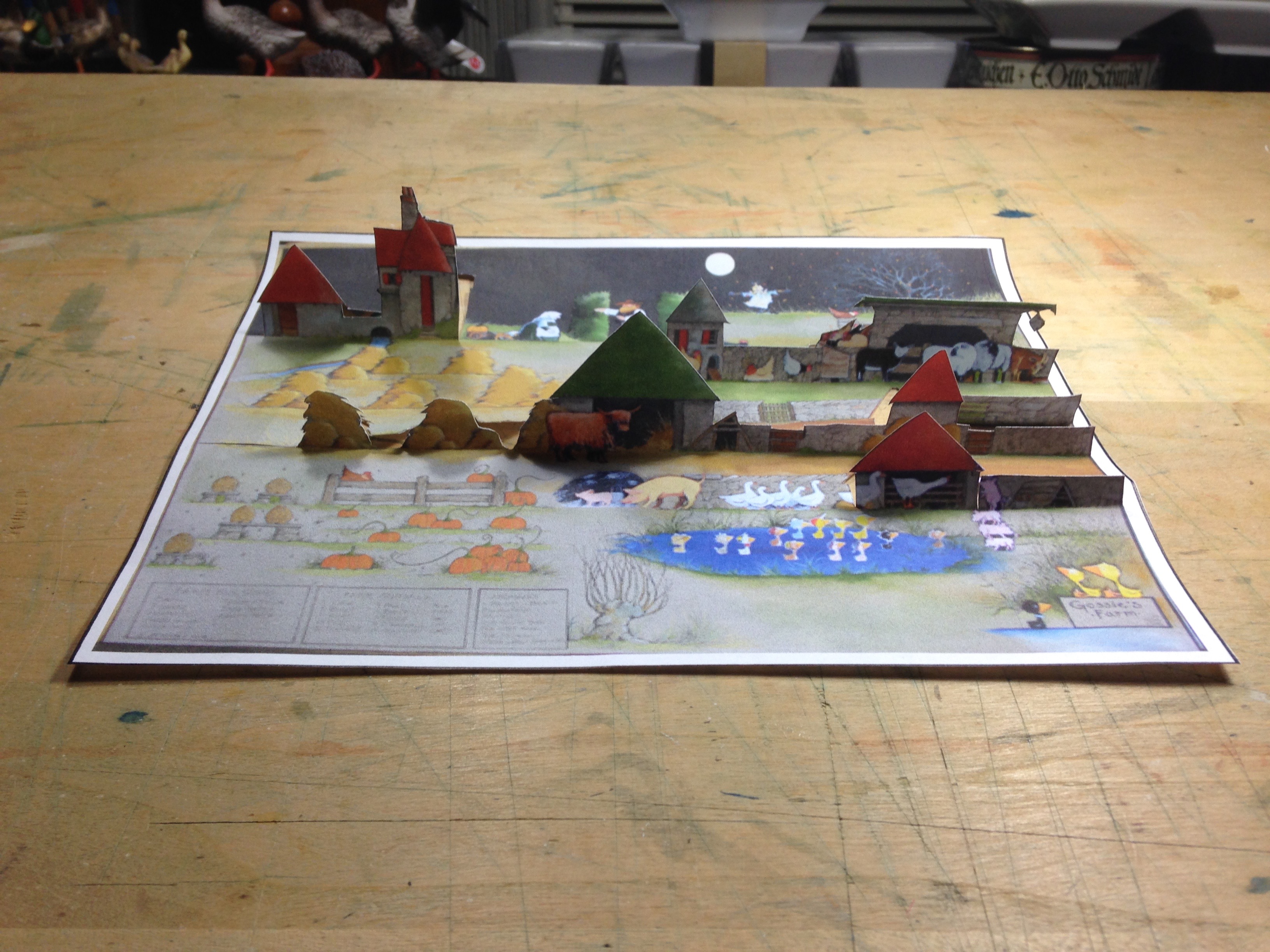
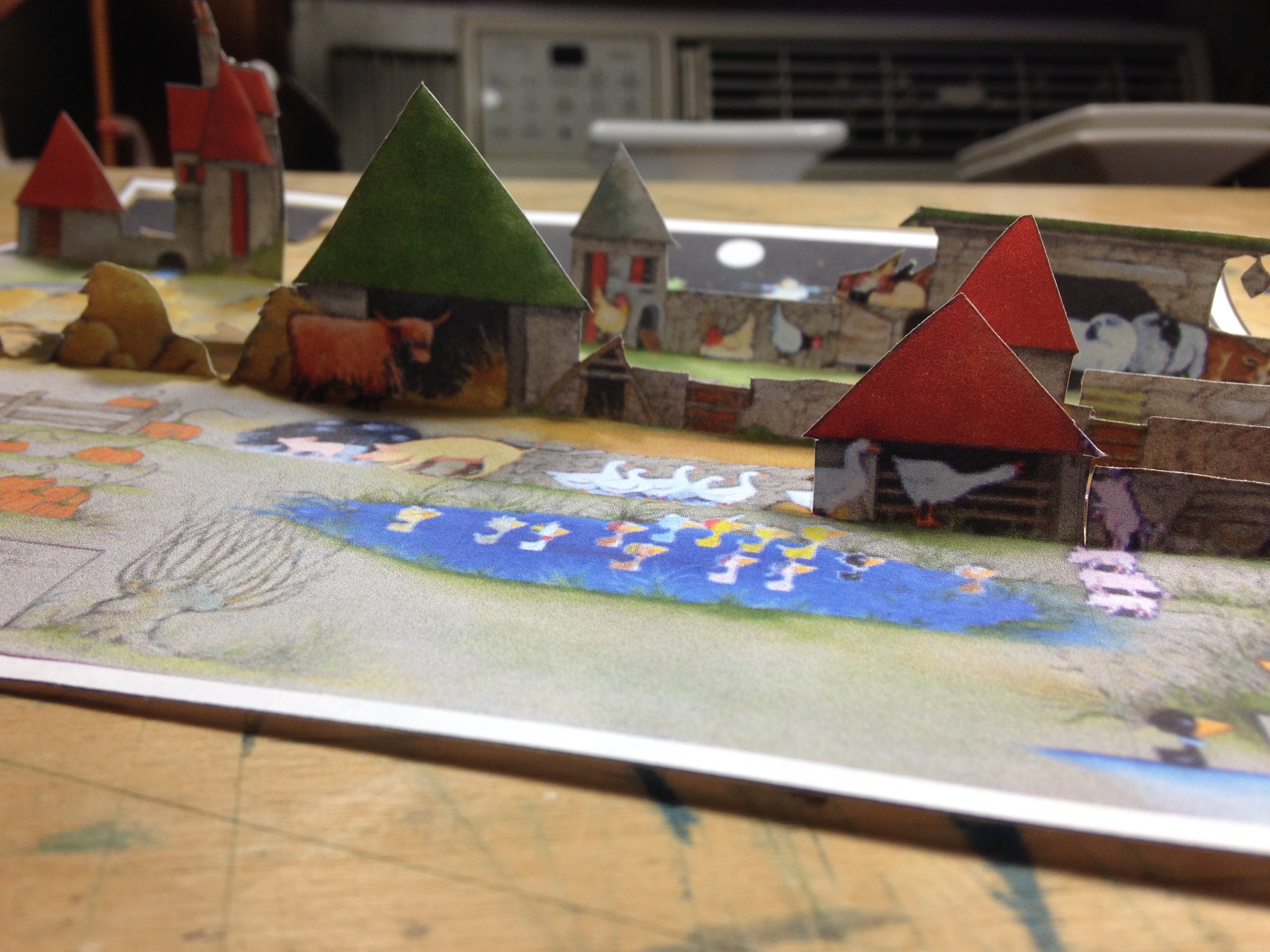
OD: All the Gossie & Friends stories are set on Old Farm. In order to keep the story lines and setting consistent I drew and painted a Projection Map of Old Farm. This map shows exactly where each farm building is located, where the pond is located, the beehives, pumpkin patch, apple tree, etc. Every time I write a new story I only have to look at the map in order to figure out where the main action of the story will take place or how I can move the goslings around Old Farm in a logical and interesting way.
I even drew an aerial map of Old Farm so that I can easily visualize the entire farm.
EH: How big is Old Farm? It seems like it’s huge!
OD: Ah, Old Farm actually only sits on an acre of land and is enclosed by an ancient stone wall. You have to remember that an acre would be a large world to the small goslings. It’s a safe, self-contained world. I think part of the success of these little books is the fact that young readers can easily identify with the goslings as they make new discoveries, come across something unexpected, interact with other farm animals—sheep, goat, cow, pigs, piglets, ducklings, hens, chicks, dog. In addition to the farm animals the goslings also encounter other animals: hedgehogs, moles, bats, mice, insects, frogs, turtles, and so on. The goslings have simple adventures but to them they are BIG adventures as they go about discovering their world. And each new animal or insect adds more interest to the adventure.
EH: As always, Olivier, I am amazed at the amount of details you put into your stories, no matter how simple they first appear. I remember being fascinated by all the details in your books when I was a young boy and I still find them just as fascinating today.
I only have one final question: When will Gossie & Friends be brought to an end? Have you thought about how you will wrap up the series?
OD: Eric, in my mind I had only thought about each gosling being introduced in one or two books. My publisher, Houghton Mifflin Harcourt, had asked many years ago if I would write and illustrate a few holiday books. These were published as Merry Christmas, Ollie!, Ollie’s Halloween, and Ollie’s Easter Eggs. And this December Ollie’s Valentine will be published in time for Valentine’s Day 2016.
In addition to the holiday books, HMH produced a number of other books that they put together using my artwork to create specialty books: Gossie’s First Lift Tab Flap Book; Gossie’s Busy Day; Gossie Plays Hide-and-Seek as well as board books, larger padded board books, a tower gift box set of books, and other editions.
I have four remaining Gossie & Friends books to finish in order to wrap up the series, as you say: Gus & the Hatchlings; Ruby & Roofus; Pearl; and Pearl’s Lost Pearls. IF there is still a demand for the goslings and if I think I can create strong, interesting, unique stories, there could be other books. For example, I could see doing any number of books where I mix and match various goslings to tell new stories. And I’m pretty sure that at some point my publisher will ask for a book(s) that feature all thirteen goslings.
My prediction is that Pearl is going to steal the show! She’s going to be fabulous!
EH: What makes her so fabulous? So the series really could go on and on?
OD: Pearl is fabulous because she’s the smallest gosling and is probably the feistiest. In my mind I see her as a tiny, pint-sized diva with her pop-pearl necklace.
No, I don’t think it will go on and on. But, I do think there could be a few more interesting stories added and possibly a few guest goslings introduced. I’m not even sure I should tell you that I have actually written out 110 story lines for the gaggle of goslings!
EH: Guest goslings? And 110 story lines? That is incredible! And what in the world is a pop-pearl necklace?
OD: Eric, you are too young too remember the fabulous plastic pop pearls that we kids in the 1950s used to play with and wear. They were oversized plastic pearls that popped together so that you could make necklaces any length you wanted. They were probably the best thing ever invented! I wonder if they are still made today?
And, like I said, I always envisioned thirteen goslings would comprise the gaggle of goslings. But, I have created a few other goslings with great names that I would hate to toss by the wayside. And in the back of my mind I always have story ideas for the goslings. Just in case.
EH: Can you tell me their names?
OD: Sure. Rose and Petal, Gunnar, Gussie are a few. Rose and Petal are pinkish twin sisters that are hat obsessed! I just think they could shake things up on Old Farm if they came for a visit. Gunnar has really big feet, like me. And Gussie is a name that I borrowed from the Wooster and Jeeves books by P. G. Wodehouse. Gussie Finknottle is one of the characters in those books whose name I always got a tickle out of.
EH: I’ll have to take a look at those books. Olivier, thank you again for taking the time to sit down with me and share your thoughts and insights into your work.
OD: Eric, it’s been a pleasure. I really do appreciate your taking the time to ask such thoughtful questions. I’m not certain anyone else will find all this information interesting except you and me.
EH: Trust me, I think a lot of people will find all this information interesting.
Post Script
A few days after Olivier and I sat down to talk about Gossie & Friends he sent me an email with an interesting afterthought. He pointed out that the prominent theme, or pattern, that can be seen in his books, from Gossie & Friends right up to The Lay of Moel Eyris: The Saga of the Bear’s Son is the fact that each series is confined to a set limitation in terms of geography. Gossie & Friends will never set foot outside of Old Farm. The inhabitants of Moel Eyris are pretty much confined to their island world. Old Bear and Little Cub are bound to stay within the realm of the Northwoods and will never have contact with humans, or any other inhabitant of the islands. Olivier pointed out that most people he knows seldom travel very far from their own home turf and it was this idea he subscribes to for his characters.










 thewritinglifeathenwoodie
